PP hollow boards, renowned for their versatility and cost – effectiveness, are widely used across various industries. However, a question that frequently arises is whether they are suitable for high – temperature applications. As a supplier of PP hollow boards, I’ve encountered numerous inquiries from clients regarding the performance of these boards under elevated temperatures. In this blog, I’ll delve into the properties of PP hollow boards, their behavior in high – temperature environments, and assess their viability for high – temperature applications. PP Hollow Board

Understanding PP Hollow Boards
PP, or polypropylene, is a thermoplastic polymer known for its excellent chemical resistance, low density, and good mechanical properties. PP hollow boards are made by extruding polypropylene resin into a structure with multiple hollow channels between two outer layers. This unique design gives them several advantages, such as light weight, high stiffness, and good impact resistance. They are commonly used in packaging, advertising, automotive interiors, and construction due to their durability and ease of processing.
Thermal Properties of PP
To evaluate the suitability of PP hollow boards for high – temperature applications, it’s essential to understand the thermal properties of polypropylene. The melting point of polypropylene typically ranges from 160 – 170°C (320 – 338°F). Below this temperature, PP maintains its solid form and mechanical integrity. However, as the temperature approaches the melting point, the polymer begins to soften, and its mechanical properties start to degrade.
In addition to the melting point, the heat deflection temperature (HDT) is another important parameter. The HDT is the temperature at which a plastic material deforms under a specified load. For general – purpose polypropylene, the HDT is around 90 – 110°C (194 – 230°F). This means that when exposed to temperatures above the HDT, the PP hollow board may start to warp or lose its shape under load.
Performance of PP Hollow Boards in High – Temperature Environments
When PP hollow boards are exposed to high temperatures, several changes can occur.
Physical Changes
- Softening and Deformation: As the temperature rises towards the HDT or melting point, the PP hollow board will gradually soften. This can lead to visible deformation, such as warping, bending, or sagging. For example, if a PP hollow board is used as a shelf in a high – temperature storage area and the temperature exceeds its HDT, the shelf may start to droop, which can compromise its functionality.
- Dimensional Changes: Thermal expansion is a common phenomenon in plastics. PP hollow boards will expand when heated and contract when cooled. If the temperature fluctuations are large, these dimensional changes can cause stress within the board and may lead to cracking or delamination over time.
Chemical Changes
- Oxidation: At high temperatures, polypropylene can undergo oxidation. Oxidation can cause the polymer chains to break down, leading to a reduction in mechanical strength and an increase in brittleness. The surface of the PP hollow board may also become discolored, turning yellow or brown. This not only affects the appearance of the board but also its performance.
Factors Affecting the High – Temperature Performance of PP Hollow Boards
Several factors can influence how well PP hollow boards perform in high – temperature applications.
Material Formulation
- Additives: The addition of heat – stabilizers, antioxidants, and other additives can improve the high – temperature performance of PP hollow boards. Heat – stabilizers can prevent the polymer from degrading at elevated temperatures, while antioxidants can inhibit the oxidation process. For example, some high – performance PP hollow boards are formulated with special additives that can increase their HDT by 10 – 20°C.
- Filler Materials: Incorporating filler materials such as glass fibers or talc can enhance the stiffness and heat resistance of PP hollow boards. Glass fibers, in particular, can significantly improve the mechanical properties of the board at high temperatures by providing reinforcement.
Board Thickness and Structure
- Thickness: Thicker PP hollow boards generally have better heat resistance compared to thinner ones. This is because a thicker board can absorb more heat energy without reaching its critical temperature. For example, a 6 – mm thick PP hollow board may withstand higher temperatures for a longer period than a 3 – mm thick one.
- Hollow Structure: The design of the hollow channels in the board can also affect its heat transfer properties. A well – designed hollow structure can act as an insulator, reducing the rate of heat transfer through the board.
Applications Where PP Hollow Boards Can Be Used in High – Temperature Situations
Despite the limitations of PP hollow boards in high – temperature environments, there are still some applications where they can be used effectively.
Short – Term High – Temperature Exposure
- Packaging for Hot Products: In some cases, PP hollow boards can be used for short – term packaging of hot products. For example, they can be used to package freshly baked goods or hot food items. As long as the exposure time is short and the temperature does not exceed the critical limit, the board can maintain its shape and functionality.
- Temporary Insulation: PP hollow boards can serve as temporary insulation in high – temperature areas. For instance, they can be used to cover pipes or equipment during maintenance work to prevent heat transfer.
Low – Load High – Temperature Applications
- Non – Structural Components: In applications where the load on the board is minimal, PP hollow boards can be used at relatively high temperatures. For example, they can be used as decorative panels or signage in areas with elevated temperatures, as long as they do not need to support heavy weights.
Applications Where PP Hollow Boards May Not Be Suitable
Continuous High – Temperature Exposure
- Industrial Ovens and Furnaces: In environments where the temperature is continuously high, such as industrial ovens and furnaces, PP hollow boards are not a suitable choice. The continuous exposure to high temperatures will cause the board to melt, deform, or degrade rapidly.
- Automotive Engine Compartments: The engine compartment of a vehicle generates a significant amount of heat. PP hollow boards are not typically used in this area because they cannot withstand the high – temperature conditions for an extended period.
Conclusion
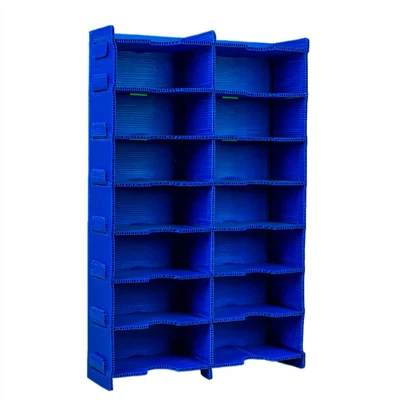
In conclusion, the suitability of PP hollow boards for high – temperature applications depends on several factors, including the specific temperature range, exposure time, load requirements, and the formulation of the board. While PP hollow boards have limitations in high – temperature environments due to the thermal properties of polypropylene, with the right material formulation and design, they can be used in some short – term or low – load high – temperature applications.
PP Hollow Board As a supplier of PP hollow boards, we offer a range of products with different formulations and properties to meet the diverse needs of our customers. If you are considering using PP hollow boards in a high – temperature application, we can provide you with detailed technical information and samples to help you evaluate the performance of our products. We are committed to providing high – quality PP hollow boards and excellent customer service. If you have any questions or would like to discuss a potential procurement, please don’t hesitate to contact us.
References
- "Handbook of Polypropylene and Polypropylene Composites", Second Edition, Edited by Howard Mark
- ASTM International standards related to the thermal testing of plastics
Qingdao Runhaoda Technology Co., Ltd.
As one of the most professional pp hollow board manufacturers and suppliers in China, we offer a wide range of products with superior quality. Please rest assured to wholesale customized pp hollow board at low price from our factory. Welcome to view our website for more information.
Address: Madian Industrial Park, Jialai Town, Jiaozhou City, Qingdao Province, Shandong Province
E-mail: sales@qdrunhaoda.com
WebSite: https://www.pp-hollowboards.com/
