Hey there! If you’ve ever grabbed a plastic bag from a grocery store, a boutique, or even a takeout spot, you probably never thought twice about all the steps that go into making sure that little bag doesn’t tear when you stuff it with your groceries, doesn’t leach weird chemicals, and actually stands up to being reused a few times. As a plastic bag supplier, I’ve been deep in the QC (that’s quality control, for anyone new to the game) side of this for almost 10 years now, and let me tell you – it’s not just a quick check at the end of the production line. There are layers of checks, tests, and tweaks that happen before a single bag even gets rolled up and shipped. I’ve seen so many new suppliers skip steps and end up with batches of bags that get sent back, or worse, leave customers with a bad taste (literally, when it’s food packaging) – so I want to break down exactly what we do at our shop to make sure every bag leaving our warehouse is solid. Plastic Bag
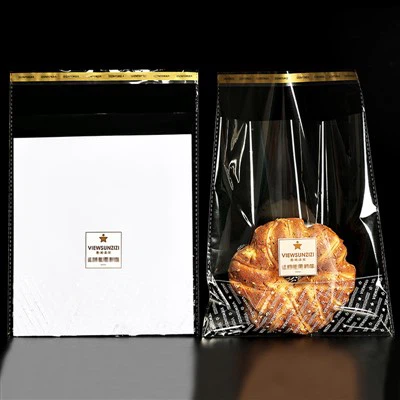
First off, let’s start with the basics: the raw material. A plastic bag is only as good as the resin we start with, right? We don’t just grab any old plastic pellet from a supplier and start melting it down. Every time a new shipment of resin shows up, our QC team does two big checks before it even hits the extruder (that’s the machine that melts and forms the plastic into a thin film). First, we check the resin’s density. Wait, why does that matter? If the resin is too dense, the bag will be stiff and hard to open – annoying for customers who’re rushing through a checkout line. If it’s too light, it’ll be flimsy and tear if you put more than a couple of items in. We use a simple density gradient column for this – it’s basically a tube with different liquid solutions, and we drop a resin pellet in. If it floats at the level it’s supposed to, that’s a pass; if not, we send the whole batch back. Second, we check for contaminants. Even a tiny speck of dirt, metal, or leftover plastic from a previous resin run can create a weak spot in the film, which turns into a bag that tears the second you pick it up. We use a metal detector for loose resin pellets, and we also do a visual check under a magnifying glass – I’ve fired a few guys over the years who skipped that visual check, because I’ve seen batches ruined by a single dust particle. Oh, and one more thing: if we’re making bags that are supposed to be recycled (a huge deal these days, with more cities requiring recyclable plastic bags), we check the resin’s recyclability rating to make sure it’s actually compatible with local recycling programs. No point in making a “green” bag that can’t actually be recycled properly.
Once the resin passes the raw material check, it goes into the extruder to become a thin plastic film. That’s where the next round of QC kicks in, because the film’s thickness and uniformity are make-or-break for the final bag. Let’s be real – a bag that’s 10 microns thick in one spot and 15 in another is going to have that thin spot tear. So we use an online thickness gauge that measures the film every few centimeters as it’s being blown (that’s the process where we inflate the melted plastic into a big balloon-like bubble to make it uniform). If the gauge detects that the thickness is off by more than 5% (our rule is strict, but not impossible), we automatically adjust the extruder’s temperature or the speed of the bubble to fix it right away. No waiting until the film is all rolled up to find out it’s bad. We also check for “gelling” during this step – gells are little clumps of over-melted plastic that create lumps in the film. A few small gells might be fine if the bag is for a clothing store, but if it’s a food bag that’s going to touch fresh produce, even a tiny gell can be a point of failure. Our QC team walks the line every hour, stopping the film if they spot more than two gells per square meter. That might sound like overkill, but when you get a call from a grocery store saying 10,000 bags are torn, you’ll be glad you caught it early.
Next step: turning the film into actual bags. That means printing on them, cutting them, and adding handles or seals, right? So now we’re dealing with converting, and that’s another area where QC can go wrong if you’re not careful. First, the printing. If we’re making branded bags for a client – say, a coffee shop with a cute logo – the print has to be crisp, not smudged, and the colors have to match exactly what the client approved. We use a color spectrophotometer for this – it measures the exact wavelength of the ink to make sure it’s a perfect match, no more guessing if the “navy blue” is actually a dark blue or a bright royal blue. We also check for registration: if the logo has multiple colors, they have to line up perfectly, not overlapping or gaps. I once had a client send back a whole shipment of bags because the red heart in their logo was off by half a centimeter – it looked messy, and they lost money on it. So now, every roll of printed film goes through a 100% visual check for the first 100 bags after a setup, then random checks every hour. If the print is off for even a few minutes, that’s thousands of bad bags. Then there’s cutting and sealing. The seal on a plastic bag has to be strong enough that it doesn’t burst when you put items in, but not so strong that it’s hard to open. We do a “burst test” on every batch of seals: we take a test bag, fill it with water until the seal breaks, and note how much pressure it takes. For standard grocery bags, we want that seal to hold at 20 pounds of pressure minimum – if it’s less, we adjust the heat on the sealing bars, because too little heat means a weak seal, too much heat means the seal will be brittle and tear. We also check the cut edges – if they’re ragged, the bag will be hard to open, so we use a caliper to make sure the cuts are straight and clean every time.
Wait, but what about safety? A lot of our clients use these bags for food, or even for medical supplies, so we can’t have them leaching chemicals. That’s a big one. We do two types of safety tests, and both are non-negotiable. First, a migration test. Basically, we take a small piece of the bag, put it in a food-simulating liquid (like ethanol for fatty foods, water for watery foods), and let it sit for 10 days at room temperature. Then we test the liquid for any heavy metals, phthalates, or other chemicals that could leach out. If any of those are over the limit set by FDA or EU standards (depending on where the client is shipping), the whole batch is scrapped. No exceptions. Second, we check for slip agents. Slip agents are added to plastic to make the film less sticky, so the bags don’t cling to each other and are easy to open. But too much slip agent can make a bag slippery and hard to hold, especially if it’s wet. So we use a coefficient of friction tester to make sure the bags have just the right amount of slip – not too much, not too little. That’s another thing that customers notice immediately, even if they don’t know why they notice it.
Oh, and let’s not forget about durability testing, because that’s what keeps customers coming back. No one wants to buy a bag that tears halfway to the car. We do three main durability tests for every batch. First, the drop test: we fill a bag with a standard weight (usually 15 pounds for shopping bags), lift it 3 feet off the ground, and drop it 10 times in different ways (straight down, sideways, on the seal, on the bottom). If it doesn’t tear after 10 drops, it passes. Second, the tear resistance test: we cut a small notch in the bag, then pull it in a machine that measures how much force it takes to make the tear spread. We want that to be at least 5 Newtons – if it’s less, we adjust the resin or the film thickness. Third, the cold test: if a client is making bags for a convenience store in a cold climate, we test how the bag holds up at 32 degrees Fahrenheit for 24 hours, because plastic gets brittle when it’s cold. If it cracks when we bend it at that temperature, we switch to a different type of resin that’s more flexible in cold weather.
Now, you might be thinking, “All this sounds like a lot of work – why not cut corners?” Well, I’ve been there. Early on, when we were a smaller supplier, I tried skipping a few tests to get a batch out faster, and it backfired big time. We had a grocery store send back 50,000 bags because the seals were weak, and we lost that client – they said we were “unreliable.” So we invested in all the testing equipment, hired a full-time QC team (not just one guy who can do a quick visual check), and built a process that’s slow but solid. These days, 98% of our batches pass on the first try, and we have clients that have been with us for 7 years, because they know they can count on our bags.
Another thing that’s part of QC that a lot of people don’t talk about: traceability. If a client has a problem with a batch, we need to be able to track every single bag back to the exact resin shipment, the exact extruder run, the exact time it was printed, and the exact QC checks that were done. So we assign a lot number to every batch, and we keep detailed records for 5 years. If a client says, “The batch we got last month has a tear issue,” we can pull up all the data on that batch, check if there were any issues during production, and if not, we can send a replacement right away. That’s huge for trust, especially when clients are relying on our bags for their business.
Wait, and let’s not forget about post-production checks too. Before we ship any bags, we do a final random audit. We pull 100 bags from the pallet, check their size, color, print, seal strength, and thickness. If even 2 of those 100 are off, we pull another 200 bags. If more than 2% of the second sample is bad, the whole pallet gets set aside for a rework or scrapped. We don’t let bad bags leave our warehouse, period. I’ve had clients ask me to let a few bad ones slide to save money, but I always say no – because one bad bag in a pack of 100 can make the whole pack look like garbage, and that’s bad for our client’s brand, which is bad for our business too.
Now, if you’re a business owner looking for plastic bags, or a fellow supplier who’s trying to tighten up your QC, let me be clear: good quality control isn’t an expense – it’s an investment. It saves you from returns, from bad reviews, from losing clients. It makes sure your product is something people can rely on, something that doesn’t let them down when they’re carrying their groceries, or their clothes, or their takeout.

If you’re interested in talking more about our QC process, or getting a quote for custom plastic bags that meet your specific needs, don’t hesitate to reach out. We can walk you through every step of what we do, send you test data, or even arrange a visit to our warehouse to see our QC team in action. We’re not just a plastic bag supplier – we’re a partner that cares about making sure your products are delivered with bags that work as hard as you do.
Plastic Bag References:
- American Society for Testing and Materials (ASTM). Standard Test Methods for Thickness and Tensile Properties of Plastic Films and Sheeting. ASTM International, 2021.
- U.S. Food and Drug Administration (FDA). Guidance for Industry: Use of Plastics in Food Contact Applications. FDA, 2022.
- European Committee for Standardization (CEN). Plastics – Packaging Bags – Test Methods for Determination of Tear Resistance. CEN, 2020.
- The Plastics Industry Association. Quality Control Protocols for Flexible Plastic Packaging. Plastics Industry Association, 2021.
Tongcheng Xurun Plastic Industry Co., Ltd.
As one of the most professional plastic bag manufacturers in China, we offer a wide range of products with superior quality. Please feel free to wholesale bulk customized plastic bag at low price from our factory. For quotation, contact us now.
Address: Shuanggang Town Industrial Park, Tongcheng City, Anqing City, Anhui Province
E-mail: 15955605705@163.com
WebSite: https://www.cnxurun.com/
