If you’ve ever stood next to a process line in an oil refinery, chemical plant, or power generation facility, watching valves click open and closed to control the flow of everything from crude oil to superheated steam, you’ve probably heard the term “double block and bleed” tossed around. As a forged steel valve supplier, I get asked about this configuration all the time—not just by new engineers just learning the ins and outs of process safety, but by veteran operators who need to make sure they’re meeting industry standards when shutting down lines for maintenance. So today, I want to break down what a double block and bleed (DB&B) forged steel valve is, why it’s not just another type of valve, and why it’s non-negotiable for the critical applications our customers rely on. Forged Steel Valves
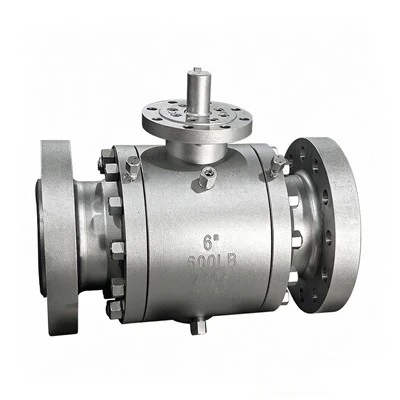
Let’s start with the basics to avoid confusion. A standard ball valve, gate valve, or globe valve is a single isolation point: open lets flow pass, closed stops it. But if you need to work on a section of a line—say, replacing a pipe segment or repairing a pressure transmitter—closing a single valve leaves a gap. What if that valve has a worn seat, a loose stem seal, or just fails? Pressure or hazardous fluid can seep past, putting workers at risk. That’s where double block and bleed comes in: it’s a safety configuration designed to eliminate that gap, not just a random valve type. When I explain this to new customers, I always use a relatable example: think of double block and bleed like having two locks on a warehouse door, and a small lock on the door between them. If the first lock fails, the second one is still there; if anything seeps past the first lock, the small middle lock captures it so no one gets hurt.
Now, tie that to forged steel, because that’s the material that makes this configuration durable enough for heavy-duty use. Forged steel valves aren’t made by cutting and welding pieces of metal together, which is how cast steel valves are produced. Instead, a solid steel billet is heated and hammered into shape under extreme pressure, grain structure is aligned to the valve’s load points, and there are no weak weld seams to crack under high pressure, extreme temperatures, or corrosive chemicals. That’s why DB&B forged steel valves are used in Class 150, Class 300, and even Class 2500 applications—think 2,500 psi working pressure for pipelines carrying natural gas, or temperatures up to 1,000°F for steam lines. When you combine the DB&B safety setup with forged steel’s strength, you get a component that’s safe and reliable when lives and assets are on the line.
So how does a double block and bleed forged steel valve actually work? Let’s walk through the operation step by step, because it’s not intuitive at first. The core of the valve is two full-port isolation elements—almost always two ball discs, though sometimes gate valves are used for lower-pressure applications—set side-by-side inside a single forged steel body, separated by a small internal cavity. That’s the “double block” part: the two closed discs act as two independent barriers to stop flow. The “bleed” is a small, dedicated port drilled through the body between the two discs, leading to the outer surface of the valve. When you close both isolation discs, you open this bleed port. Any fluid that seeps past the upstream (process side) disc gets trapped in that middle cavity, and you bleed it off to a safe, designated collection point—either a closed drainage system for hazardous materials or just to the atmosphere for non-toxic fluids.
Wait, I’ve had customers ask me: why not just use two separate valves instead of a DB&B valve? That’s a fair question. A lot of plants do use two single valves in series for isolation, but a DB&B forged steel valve has a big advantage here. First, it’s compact. Two separate valves take up twice the space on a skid or line, which is a huge deal in plants where every inch of piping is planned out. Second, it eliminates potential leak points from flanges and gaskets between two separate valves. Each flange joint is another place where a seal can fail, so cutting those out reduces your risk of leakage. Third, it’s simpler to operate for maintenance. When you need to isolate a line, you don’t have to crawl around to two different valves on a crowded line—you operate one valve, check the bleed, and know you have a positive isolation. I’ve seen plants switch from two single valves to DB&B forged steel valves and cut their maintenance time on isolation events by 30% because the process is standardized and less error-prone.
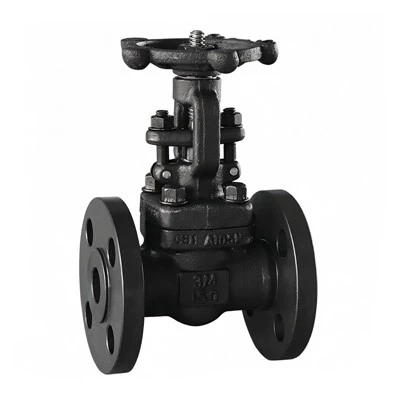
But here’s the catch: not all double block and bleed configurations are the same, and not all forged steel valves are suitable for DB&B. For example, a ball valve used for DB&B has to have bubble-tight seats when closed—no tiny leaks, because those would let fluid seep past the upstream disc into the cavity. A standard ball valve with a soft seat might work for low-pressure water, but for hydrogen sulfide or superheated steam, you need a metal-seated ball forged steel valve, because soft seats can degrade and fail over time. We also make DB&B gate valves for applications where throttling isn’t needed, but remember: gate valves shouldn’t be used for flow control, only for full open or full closed, because they can erode if partially open. That’s a mistake I see a lot of new engineers make: mixing and matching valve types for DB&B, which can lead to safety issues.
Now, let’s talk about the standards that govern DB&B forged steel valves, because this isn’t just about what works—it’s about what’s code. Most process industries follow standards like ASME B31.1 for power piping, ASME B31.3 for process piping, and API 6D for pipeline valves. These standards define exactly what double block and bleed means, what kind of testing the valves need to pass, and when it’s required. For example, OSHA’s Process Safety Management (PSM) standard requires positive isolation for all maintenance on process lines that handle hazardous materials, and DB&B forged steel valves are one of the approved methods for that positive isolation. If you don’t use a compliant DB&B setup, you’re not just risking an accident—you’re risking fines, plant shutdowns, and liability if something goes wrong.
I also want to address a common misconception I hear from customers: “DB&B is only for new plants.” No, it’s also a great upgrade for existing facilities that are retrofitting or updating their safety systems. We’ve worked with refineries that added DB&B forged steel valves to their older lines that were using two single valves, and they’ve seen a big drop in unplanned shutdowns from leakage. Another example is petrochemical plants that handle volatile organic compounds (VOCs): a tiny leak from a single valve can release toxic fumes, but a DB&B setup means there’s nowhere for those fumes to go except the bleed port, which is routed to a vapor recovery system. That’s not just safer—it’s also better for the environment and helps companies meet EPA emissions regulations.
When we design and manufacture DB&B forged steel valves, we pay attention to details that make all the difference in the field. For example, the bleed port is sized correctly for the fluid and pressure: too small, and it can clog with debris; too large, and it wastes fluid or releases too much pressure at once. We test every valve twice: first for seat tightness, to make sure there’s no leakage past either disc when closed, and second for the bleed function, to make sure trapped fluid flows freely. We also offer optional features like lockable handles, so operators can lock both isolation discs in the closed position during maintenance, eliminating human error from someone opening the wrong valve. For extreme applications, like cryogenic lines for liquefied natural gas, we even make DB&B forged steel valves with specialized stem seals that can handle temperatures as low as -450°F.
Over the years, I’ve seen first-hand what happens when you cut corners on isolation. A customer of mine a few years ago was using two standard gate valves for isolation on a natural gas line, and the upstream valve developed a leak. By the time the operator checked, gas had seeped past the second valve, and a spark from a nearby welding tool caused an explosion that shut their plant down for two weeks. After that, they replaced all their isolation points with DB&B forged steel valves from our inventory. That’s the thing about valve safety: it’s not something you notice until it fails, and by then it’s too late.
So whether you’re designing a new processing line, upgrading an old facility, or just looking for a more reliable way to isolate lines for maintenance, double block and bleed forged steel valves are a solution that balances safety, space, and durability. They’re not a generic valve—they’re a purpose-built component engineered to eliminate the “gap” in isolation that leads to most process safety incidents.
If you’re working on a project and you have questions about what DB&B forged steel valve is right for your application, or you’d like to discuss specifications, testing, or pricing, don’t hesitate to reach out. We have years of experience supplying valves for oil and gas, chemical processing, power generation, and many other critical industries, and we can help you find the right solution to meet your safety and operational needs.
Electric Actuated Ball Valve References
API 6D, Specification for Pipeline Valves, American Petroleum Institute
ASME B31.1, Power Piping, American Society of Mechanical Engineers
ASME B31.3, Process Piping, American Society of Mechanical Engineers
OSHA 29 CFR 1910.119, Process Safety Management of Highly Hazardous Chemicals, Occupational Safety and Health Administration
Zhejiang Chenxiang Valve Co., Ltd.
We are one of the most professional forged steel valves manufacturers and suppliers in China, also support customized service. We warmly welcome you to wholesale high quality forged steel valves in stock here from our factory. If you have any enquiry about quotation, please feel free to email us.
Address: No. 126 Zhongxing Road, Wenzhou Industrial Park, Longwan District, Wenzhou City, Zhejiang Province
E-mail: vip@chenxiangvalve.com
WebSite: https://www.cxindustrialvalve.com/
