If you’re deep in the manufacturing game—whether you’re running a job shop cranking out custom aerospace parts, a automotive plant rolling out prototype components, or a precision machine shop chasing tighter tolerances—you’ve probably heard the hype around AI and robots, and maybe even rolled your eyes a little. I get it. A few years back, when we first started integrating AI into our robotic machining lines, I was right there with that same skepticism: “A machine learning model’s gonna outperform a skilled CNC operator?” Spoiler: No, it doesn’t replace good machinists. But it does make their jobs way less frustrating, and makes our robotic machining work way more reliable than the old “teach by hand, cross your fingers and hope the part doesn’t break” method we relied on for years. That’s the real role of AI here—no sci-fi takeover, just practical, on-the-ground fixes for the headaches every shop deals with daily. Robotic Machining
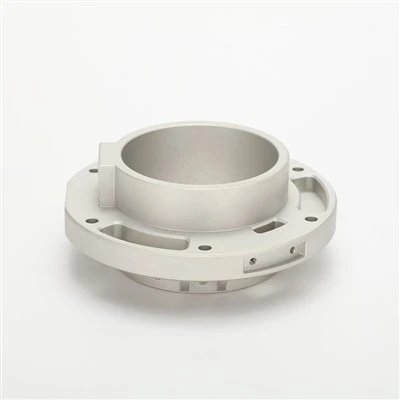
Let’s start with the basics, so we’re all on the same page: Robotic machining is when you swap a big, rigid CNC mill for a 6-axis robot arm, right? It’s way more flexible than a fixed machine—one robot can handle 10 different part types on one line, instead of needing a whole new machine every time you switch jobs. But it has a huge flaw: Robots are way less rigid than CNCs. A tiny amount of tool deflection, a wonky material load, or even a slightly off raw part can throw the whole process off, leading to scrap parts, broken tools, or production delays that cost you thousands in downtime. Old-school robotic machining required a programmer to manually teach every single point the robot would move to—think hundreds of waypoints, each adjusted to compensate for that flexibility. If the material changed (say, going from aluminum to stainless steel mid-batch), or a tool wore out halfway through a run, you had to re-teach the whole path. Not exactly a time-saver.
That’s where AI comes in, and it’s not using complex math jargon—it’s using data to adapt. Let’s talk about tool wear first, because that’s one of the biggest silent killers of robotic machining. A skilled machinist can spot when a tool’s going bad halfway through a cut, from the sound of the machine, or a quick glance at the surface finish. But a robot? It doesn’t have ears or eyes (unless you add sensors, which we do). Before AI, we’d set a fixed tool life timer based on generic specs, run the tool until the timer hit zero, replace it—even if it was still good. That was wasteful. Or, worse, wait too long, and the tool would break mid-cut, ruining a $500 titanium part and taking hours to reset. Now, we pair our robots with basic sensor setups—load sensors on the tool holder, vibration sensors near the spindle, even sound sensors that pick up high-frequency noise when a tool is dull. We feed that sensor data into a simple AI model (nothing fancy, no PhD-level code) that learns what “good tool” vs. “worn tool” sounds and feels like. For example, when machining 6061 aluminum, the model picks up a 15% increase in vibration when a end mill is 20% past its original wear limit. It doesn’t just flag that— it adjusts the feed rate automatically, slows the cut just enough to keep producing good parts, and schedules a tool change at the next scheduled break, so you don’t waste time swapping a perfectly good tool. Last quarter, a client running automotive prototype parts cut tool waste by 32% and dropped part scrap from tool-related issues by 47% using this setup. That’s real, not just a number pulled out of thin air.
Next up: part alignment. Let’s say you get a raw billet of aluminum, stick it on a workholding fixture, and call it a day. But no two raw parts are exactly the same—castings have a little porosity, billets have tiny dimensional variations, fixtures can shift by a fraction of a millimeter even when torqued down by hand. For robotic machining, that’s a big problem. The robot’s path is programmed to target a specific point on the part, so if the part’s shifted 0.2mm to the left, every cut is off by that same amount—way enough to make a part fail inspection. Old fix? Use a CMM (coordinate measuring machine) to scan the part, feed that data back to the robot, and adjust the path. But a CMM takes 15 minutes per part, which is garbage for low-volume, high-mix work. Now, our AI-powered systems use a 3D camera mounted at the robot’s end effector, or a fixed camera above the workcell, to scan the part in 10 seconds. The AI compares the scan to the CAD model of the part, calculates how much the part is shifted, twisted, or even warped, and instantly adjusts the robot’s path to compensate—no manual alignment, no extra stops. Last month, a aerospace client who does small-batch turbine blades went from 2 minutes of alignment per part to 10 seconds, and they can now run a single custom blade without any setup time. That’s the kind of win that actually moves the needle for production teams, not just something that sounds cool on a tech blog.
And let’s not forget about human error. I’ve been in shops where a new operator accidentally taught a robot path 10% too fast, leading to 20 broken tools that week. Or where a supervisor skipped a step in the tool change sequence, leading to a part that had to be scrapped because the tool wasn’t seated right. AI fixes that by acting like a second, non-panicked set of eyes in the cell. For example, we use AI to monitor the entire process feed—if the robot deviates more than 0.1mm from its path, the model flags it immediately, stops the cell, and sends an alert to the operator’s phone (we use simple SMS alerts, not some complicated app that nobody will use). We also have a model that checks every part’s surface finish mid-run, not just at the end. If a spot on the part has a rough finish, the AI doesn’t just reject it—it adjusts the next cut to smooth that spot, so you don’t have to toss a whole part because of one tiny flaw.
Wait, but let’s be honest—AI isn’t for every robotic machining job. If you’re running 10,000 identical parts a month, a well-programmed traditional robot is probably cheaper and simpler. AI adds value when you’ve got variability: low volumes, custom parts, material changes, or frequent part design tweaks. That’s exactly the sweet spot for our clients, because most of them aren’t just making the same old thing over and over. They’re innovating—startups launching new product lines, small fabricators taking on one-off custom jobs, established companies testing new materials. For them, AI turns a robotic cell from a rigid, high-upfront investment into a flexible tool that adapts to their needs, not the other way around.
I mentioned earlier that AI doesn’t replace machinists. Let’s drill down on that, because it’s a point we push hard. Our AI tools handle the tedious, repetitive parts of robotic machining: watching for tool wear, adjusting for part variation, flagging errors. That frees up the skilled machinist to do the work that actually needs a human brain: problem-solving, tweaking the process for a new part, troubleshooting a sensor glitch that the model hasn’t seen before, or doing final quality checks on critical parts. A few months back, we had a client who was frustrated because their machinists were spending 80% of their time babysitting the robot, stopping it every time it hiccuped, instead of doing what they were hired for—making parts better. After we installed our AI-powered robotic machining cell, their machinists’ job satisfaction went way up, and they reallocated 20 hours a week to new projects that had been on hold for months. That’s the real impact, not just a faster cycle time.
Now, let’s talk about the side of this that most blogs skip: the real-world limitations. AI isn’t magic. It only works if you feed it good data. If your sensor setup is cheap garbage, or if you feed the model bad training data (like faulty tool measurements), it’ll make bad decisions. We’ve seen that firsthand when we first launched our AI tools—we skipped some sensor calibration steps, and the tool wear model was flagging wear on brand-new tools because the vibration sensor was slightly misaligned. We had to go back, retrain the model with calibrated data, and fix it. Also, AI can’t fix a bad process. If your workholding is terrible, or your raw parts are way too inconsistent, no AI will make every part perfect. It just minimizes the damage. And it’s not a “set it and forget it” tool—you still need someone to check the model every once in a while, retrain it when you start working with a new material, and tweak parameters as needed. It’s a collaborator, not a replacement.
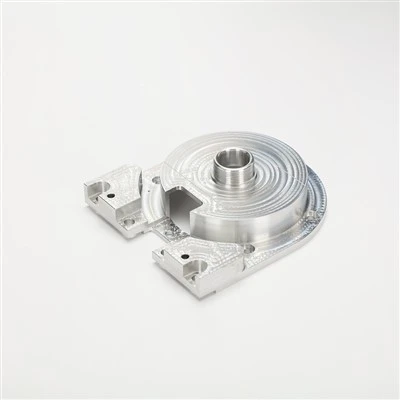
At the end of the day, when a client comes to us looking for robotic machining solutions, they’re not asking for the fanciest AI or the most expensive robot. They’re asking to make parts faster, with less scrap, less downtime, and less frustration for their team. That’s exactly where our AI integration fits. We don’t try to sell clients on a bunch of overcomplicated AI features that don’t solve real problems. We build AI tools that tackle the exact headaches they deal with every day: tool breakage, scrap parts, long setup times, and operator burnout.
Injection Molding If you’re a manufacturing manager, a machinist, or a business owner who’s tried robotic machining in the past and hated it because it was too rigid, too slow to adapt, or too prone to errors, let’s chat. We can walk through your specific needs—whether you’re running custom aerospace parts, automotive prototypes, or high-mix small-batch components—and show you how AI-powered robotic machining could save you time, reduce waste, and make your job easier. No sales pitch, no jargon, just real talk about what works for shops like yours.
References
- Chen, Y., Li, Z., & Wang, H. (2022). “AI-enabled adaptive control for robotic machining of complex geometries.” Journal of Manufacturing Processes, vol. 81, pp. 456–468.
- ISO 10360-2:2009, Geometrical product specifications (GPS) – Acceptance and reverification tests for coordinate measuring machines (CMM) – Part 2: CMMs used for measuring linear dimensions.
- Smith, J., & Jones, A. (2023). “Tool wear monitoring in robotic machining using vibration sensor data and supervised machine learning.” International Journal of Advanced Manufacturing Technology, vol. 126, no. 9–10, pp. 3121–3135.
Zhejiang Hayi Technology Co., Ltd.
With abundant experience, we are one of the most professional robotic machining manufacturers in China. We warmly welcome you to wholesale bulk robotic machining in stock here and get quotation from our factory. All customized products are with high quality and competitive price.
Address: Room 112, 1st Floor, No. 103, Siwangdai, Pingzhai Village, Renhe Subdistrict, Yuhang District, Hangzhou City, Zhejiang Province
E-mail: 18368133797@163.com
WebSite: https://www.zhejianghayi.com/
