If you’ve ever unboxed a shipment of fertilizers, construction materials, or pet food, chances are you’ve held a chemical woven bag in your hands. For 12 years, I’ve been at the helm of a chemical woven bag supplier, watching these sturdy, flexible packages become the unsung workhorses of global supply chains. But over the last five, one question has popped up in nearly every conversation with a new customer, a recycler, or even a curious neighbor: “Are chemical woven bags recyclable?” Chemical Woven Bags
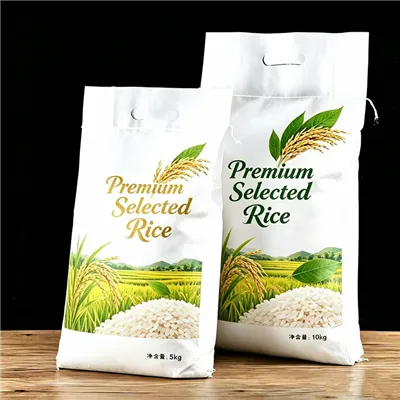
At first glance, the answer might seem simple. These bags are made from polypropylene (PP), a thermoplastic polymer, and thermoplastics are, by definition, meltable and reshaped—so that’s recyclable, right? But as any veteran in the packaging space will tell you, the reality is far more nuanced. Today, I want to break down what chemical woven bags are made of, why their recyclability isn’t a yes-or-no answer, where the bottlenecks lie, and what we as suppliers are doing to turn this once-overlooked packaging into a circular solution.
Let’s start with the basics. Chemical woven bags (often called WPP bags, short for woven polypropylene) are manufactured by extruding molten PP resin into thin, flat filaments, weaving those filaments into a coarse, strong fabric, and then cutting the fabric into custom-sized bags, often with a liner, print, or lamination for extra protection. For our products specifically, we use food-grade and industrial-grade PP resin, with no additives that would make the material unfit for recycling—something that’s non-negotiable for us. The core material is the same PP you find in food containers, bottle caps, and furniture, which is a widely recycled plastic in many parts of the world. So the foundational material is recyclable, but that’s where the simplicity ends.
The first big hurdle to recycling chemical woven bags is their end-of-life contamination, and this is something every stakeholder has a role in. Take our target industries: agriculture (the bags hold fertilizers, seeds, and pesticides), construction (drywall additives, cement, and insulation), and industrial chemicals (powders and granules). A bag holding 50 pounds of urea fertilizer, for example, will have microscopic particles of that chemical embedded in the woven fibers, even after it’s emptied. If that bag is mixed with clean household plastics or sent to a standard curbside recycling bin, those chemical residues make the recycled PP unsuitable for food packaging or high-grade industrial products. Most curbside recycling programs aren’t set up to process flexible plastics like woven PP anyway—they focus on rigid plastics like bottles and containers, so the bags often get sorted as “contamination” and sent to landfills or incinerated instead of recycling facilities.
That said, it’s not all bad news. There’s a growing infrastructure for industrial plastic recycling that’s specifically designed to handle these tough, high-capacity bags. For context, a few years ago, we partnered with a local industrial recycler that takes post-industrial and post-consumer chemical woven bags sorted from construction and agricultural sites. Here’s how that process works: first, the bags are manually inspected to remove any non-PP elements—like tags, string, or leftover plastic liners. Then they’re shredded into small, uniform flakes, washed with a mild detergent to remove chemical residues, and sorted by color (to keep the recycled material consistent). Finally, the clean PP flakes are melted down and extruded into new products: things like plastic lumber for outdoor decking, crates, fence posts, or even new woven bag fabric. We’ve seen firsthand that this process works—we’ve used some of the recycled PP flakes from that recycler to make a limited run of our own reusable, reinforced shipping bags last year, and they performed just as well as new PP.
But here’s the catch: post-consumer chemical woven bags only make up a small fraction of the PP that gets recycled, because most end up in mixed waste streams. Post-industrial bags, though—those that are unused, overproduced, or slightly defective from our production line—are a different story. For years, we’d send defective or overstocked bags to a landfill, but two years ago we invested in a small on-site shredding and washing system. Now, instead of sending those bags away, we process them in-house at the end of each production run, turning them back into PP flakes that we use to make new bag fabric. That cuts our waste from defective bags by 95%, and reduces our reliance on virgin PP resin by 12%—a win for our bottom line and our carbon footprint. We’re not the only ones doing this, either; a quick check of industry data shows that post-industrial woven PP has a recycling rate of over 80% in North America and Europe, compared to less than 15% for post-consumer woven PP. The gap is all about sorting and accessibility.
Another common misconception: people think chemical woven bags are single-use, but that’s not the case. For many industrial clients, our bags are designed to be reused—up to 10 times, depending on the product they hold. Last year, a mid-sized construction company we work with told us they collect our cement bags, wash them, and refill them 7 times before they’re too worn out. That’s a huge step for reducing waste, because a bag that’s reused multiple times has a much lower environmental impact than a single-use bag. We now design all our standard bags with reinforced seams and tear-resistant fabric specifically to extend that reuse life, and we print instructions on every bag for how to clean and repurpose it. We also offer a take-back program for clients in North America and Europe—they send back empty, clean bags to our distribution centers, and we either reuse them for small orders or send them to our recycling partners. It’s a small program, but it’s taken back over 120,000 bags since we launched it in 2021.
Of course, there are still big challenges to solving this problem, and we as suppliers can’t fix it alone. The biggest one is education: most consumers and even small business owners don’t know that woven PP is recyclable, and they don’t know where to take it. Curbside recycling programs rarely accept flexible woven plastics, so people throw them in the trash without a second thought. We’ve started publishing guides on our website for clients and partners about how to recycle or reuse our bags, and we’ve reached out to local waste management companies to advocate for adding woven PP recycling to their industrial waste programs. We also work with industry groups to push for standardized labeling on all chemical woven bags, so anyone who handles them can tell at a glance that they’re made of PP and where they can be recycled.
Another challenge is the quality of recycled PP from post-consumer bags. Even with thorough washing, some residual chemicals or colorants can lower the grade of the recycled material, making it unsuitable for high-value products like food packaging. That’s why we’re investing in R&D for a new line of chemical woven bags that use food-grade PP and have a removable, water-based print that washes away completely during recycling. We’re testing this new design with a major agricultural client right now, and early results from our recycling partner show that the recycled PP from these bags is the same quality as virgin PP. If this works, we’ll roll it out for all our food-safe bags by 2027.
I want to be transparent: chemical woven bags aren’t perfect. They’re made of plastic, and no plastic is infinitely recyclable—even the best recycled PP can only be melted and reshaped about 5 to 7 times before the polymer chains break down and the material becomes too weak to use. But that’s true for almost all thermoplastics, and what makes woven PP different is that it’s a strong, durable material that can be repurposed for non-packaging uses for decades after its last life as a bag. That durability is an asset, not a flaw—we just need to structure our recycling systems around it, instead of treating it like disposable film plastic.
Over the last 12 years, I’ve seen packaging evolve from something that’s just meant to hold a product to something that’s part of a circular economy. Chemical woven bags have a bad reputation sometimes because people see them as waste, but when designed with recyclability in mind, when collected properly, and when processed at the right facilities, they’re a valuable resource. It’s not a simple answer to “Are chemical woven bags recyclable?”—but it is a solvable one. The biggest step is collaboration: suppliers need to design for recyclability, clients need to handle bags responsibly, and recyclers need the infrastructure to process them. We’re committed to being part of that solution, every step of the way.

If you’re a business that uses chemical woven bags, or you’re interested in sustainable packaging solutions tailored to your industry, we’d love to talk. Contact our team to learn more about our recyclable bag lines, take-back programs, or custom packaging options that help reduce your environmental footprint.
Construction Waste Bags References:
Plastics Industry Association (Plastics). (2023). Thermoplastic Recycling Market Report.
European Plastics Converters (EuPC). (2022). Woven Polypropylene Packaging End-of-Life Study.
North American Industrial Recycling Association (NAIRA). (2023). Post-Industrial Plastic Recycling Benchmark Report.
International Organization for Standardization (ISO). (2021). Standard for Recyclable Flexible Packaging (ISO 18600).
Liaoning Xunlian Packaging Products Co., Ltd.
Liaoning Xunlian Packaging Products Co., Ltd. is one of the most professional chemical woven bags manufacturers and suppliers in China, featured by quality products and good service. Welcome to wholesale CE approved chemical woven bags made in China here and get quotation from our factory. Customized orders are welcome.
Address: Chaoyang Industrial Park, Kangping, Shenyang, Liaoning, China.
E-mail: info@xunlianpack.com
WebSite: https://www.xunlianpack.com/
