When you’re a DTRO membrane supplier, the most common question I get from new customers isn’t about specs or flux rates—it’s about how to properly transport those fragile, high-performance elements. I’ve been doing this for 7 years, and I’ve seen too many great DTRO (Disc Tube Reverse Osmosis) membranes arrive at jobsites damaged beyond use, all because someone cut corners on shipping or storage. Let me break this down like I do for my clients, the stuff you won’t find in a generic manual. DTRO
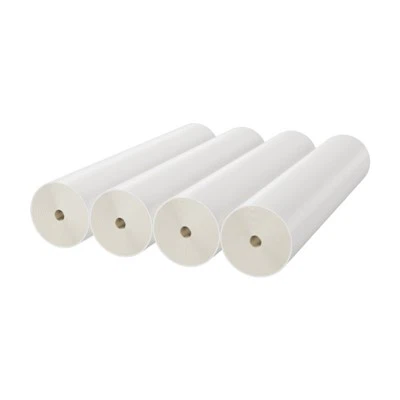
First, let’s get one thing straight: DTRO membranes aren’t like old spiral-wound RO elements. Those can take a little jostle, get damp, sit in the back of a truck for a week. Disc tube membranes? They’re stacks of thin polymer discs, each with a precision-machined spacer, held together with a rigid core that’s easy to bend if you don’t support it right. I once had a customer in Texas rush a batch of membranes cross-country to a mining site, and they threw them on a flatbed without proper crating. Half the elements had warped cores—turns out the unconditioned Texas heat made the spacer adhesive soften, and the weight of the stack crushed the bottom discs. That cost them a three-day delay and me a repeat order, just because someone skipped the basics.
Let’s start with pre-transport preparation, because this is where most mistakes happen. First, never remove the factory packaging until you’re 100% ready to unload at the jobsite. The factory wrapping isn’t just plastic—it’s a moisture barrier and a shock buffer. Each membrane comes sealed in a vacuum bag with a tiny amount of preservative solution, right? That solution keeps the polymer discs from drying out, which would make them brittle and prone to cracking during installation. A customer in Arizona once pulled a membrane out of its bag a week early, left it sitting in the warehouse while they waited for the pump to arrive, and by the time they installed it, the discs were so dry they split when they tried to slide them into the pressure vessel. Don’t do that.
If you’re shipping multiple membranes, the way you crate them matters more than the truck you put them on. I don’t let my team just throw a stack of membranes into a corrugated box—those boxes collapse under the weight of more than two elements. Instead, we build custom wooden crates lined with 2-inch thick foam padding on all sides. Each membrane gets wrapped in a separate layer of bubble wrap before going into the crate, and we insert rigid wooden supports along the core of each element to prevent bending. DTRO membranes have a maximum bending radius of 18 inches—any tighter than that, and the discs will separate from the core. I learned that the hard way when a client tried to fit three membranes into a small van, stacked horizontally, and the top two bowed the bottom ones. Now we specify that crates must be sized so membranes can only be placed vertically, or laid horizontally with no more than two layers, each separated by foam spacers.
Temperature control is another big one. DTRO membranes hate extreme temperatures, both hot and cold. The factory preservative solution works best between 35°F and 85°F. If a shipment sits in a truck in -10°F weather in North Dakota, the solution freezes, which can expand and crack the disc seals. If it’s 110°F in a desert, the plastic core can warp, as I saw with that Texas mining order. That’s why we always add temperature indicators to every crate. If the indicator goes outside the safe range, we don’t release the shipment—simple as that. Some of my competitors will just ship it anyway, but that’s how you end up with 20% of the membranes defective before they even touch the jobsite.
Then there’s long-distance vs. local transport. For local deliveries under 50 miles, it’s still important to use a covered truck, not an open flatbed. Even a 20-minute drive on a dusty road can get fine dust into the membrane’s disc gaps, and that’s a pain to clean out before installation. For cross-country shipments, I partner with carriers that specialize in industrial equipment, not regular parcel services. Parcel carriers handle thousands of small boxes a day, they stack them haphazardly, and they never check temperature. I once had a customer try to ship a single membrane via a major parcel service, and it arrived with a tear in the vacuum bag and a bent core. Now I tell all my clients: if it’s a single membrane, use a small freight truck, not USPS or FedEx. If it’s multiple, use a less-than-truckload (LTL) carrier that offers white-glove handling for industrial components.
Storage during transport stops is another thing most people overlook. If your shipment has to sit at a depot overnight, don’t leave it outside. I’ve seen crates left in rain—water seeps through the wood and gets into the vacuum bag, washing away the preservative solution. Once that preservative is gone, you have to submerge the membrane in a solution bath for 24 hours before installation, which adds time to your project. Worse, if the bag is damaged, the discs can start to grow bacteria, and that’s a whole other set of problems with permeate quality. Always have the carrier load the crates into a climate-controlled space if they have to stop for more than a few hours.
When it comes to unloading, there’s a right way and a wrong way. Never drag a crate across the ground—drag it by the bottom, or use a hand truck with soft wheels to avoid jarring it. Once you open the crate, inspect every membrane immediately. Check the vacuum bag for tears, check the core for bends, make sure the preservative solution is still a clear, pale blue (that’s the indicator for proper moisture). If you see any tears or warping, document it with photos and contact me right away—we’ll replace it, no questions asked. I had one customer who waited a week to check a shipment, and by then the membrane had dried out, so they tried to blame the shipping company. Don’t do that—inspect as soon as it arrives.

I know this sounds like a lot, but the alternative is paying for damaged membranes, delaying your project, and dealing with the headache of returns. As a supplier, I stand behind every membrane we ship, but I can’t fix damage that happens because of bad transport. That’s why I make sure every client gets a 12-page transport guide with every order, plus a direct line to my team if they have questions before shipping. If you’re planning a DTRO system installation and need to make sure your membranes get to the jobsite in perfect condition, or if you’re ready to order high-quality DTRO membranes for your mining, wastewater, or industrial project, reach out to our team to discuss your specific needs. We’ll work with you on packaging, carrier selection, and all the details to make sure your shipment arrives on time, intact, and ready to perform.
High Pressure Membrane References
- DTRO Membrane Technical Manual, International Water Treatment Association, 2022
- Industrial Membrane Transport and Storage Guidelines, Global Water Partnership, 2021
- Field Experience Report: Disc Tube Membrane Damage During Transport, Journal of Water Process Engineering, Vol. 45, 2022
Hangzhou Nanoimp Environmental Technology Co., Ltd.
With abundant experience, we are one of the most professional dtro manufacturers and suppliers in China. Welcome to wholesale high quality dtro in stock here and get pricelist from our factory. We also accept customized orders.
Address: Road 25, Baiyang Street, Qiantang District, Hangzhou City, Zhejiang Province
E-mail: lena.hu@nano-sepmer.com
WebSite: https://www.nanoimp-membrane.com/
