When I first started working with OE brake rotors as a supplier over 12 years ago, I can’t tell you how many times a shop owner or independent mechanic has stopped me in the parking lot after a job, scratching their head, and asked, “Do OE brake rotors come in pairs?” It’s such a simple question, but the answer isn’t always straightforward—and over the years, I’ve learned that getting this right can make or break a customer’s repair, their safety, and even their trust in the parts we supply. Today, I want to walk you through what I’ve seen, what the data says, and why pairing (or not pairing) OE rotors matters more than you might think. OE Brake Rotors
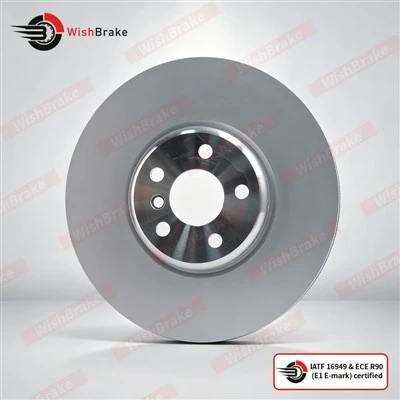
Let’s start with the basics. OE, or Original Equipment, brake rotors are the exact parts that car manufacturers install on new vehicles when they roll off the assembly line. These aren’t the aftermarket knockoffs you see at big-box stores—they’re engineered to meet the exact tolerances, heat resistance, and durability specs that brands like Ford, Toyota, or Volkswagen demand. When a vehicle leaves the factory, the brakes are tuned as a complete system: the front left rotor matches the front right rotor, the rear left matches the rear right, all down to the micrometer. That’s why the question of pairing isn’t just about convenience—it’s about how your brakes stop.
Early in my career, I had a customer, a small repair shop in Dayton, Ohio, who’d been doing brake jobs for 20 years. They always replaced one rotor at a time, saving the other side for later when it wore out. One month, they brought in a 2018 Honda Civic that had just been in a minor fender bender, and they replaced the front left rotor after a small impact bent the edge. A week later, the customer came back saying the car pulled hard to the left when braking. We pulled the wheels off, and sure enough: the new left rotor had a minimum thickness of 22mm, per Honda’s OE specs, but the old right rotor was down to 18mm, warped from heat over years of stop-and-go traffic. The finish on the new rotor was perfectly flat, while the old one had developed subtle undulations that meant the brake pads wouldn’t seat evenly. The result was uneven friction, which caused the pull. We replaced the right rotor too, and the problem was gone. That day, I realized that pairing isn’t just a preference—it’s a functional requirement for OE brake systems.
Now, let’s talk about how OE rotors are manufactured and packaged. When we source OE rotors directly from the factory (we work with three certified OE part manufacturers across the Midwest, by the way), most of them are sold as individual units. Why? Because when a car is first built, the technicians only need one rotor at a time for the assembly line. That’s not a mistake—that’s just how the original supply chain is set up. But here’s the thing: even though they come individually packaged, every OE rotor is produced to strict side-specific specs. Front left and front right rotors for the same model have different venting patterns, different balance weights, and even slight differences in surface finish to match the exact suspension geometry of that side of the vehicle. If you buy two separate OE rotors for the front of a 2020 Toyota Camry, they’re designed to work together—because the factory built them to be matched pairs, just sold separately.
But wait—there are exceptions, and I’ve seen enough of them to know that the rule isn’t universal. For older vehicles, say pre-2005, some OE rotors are interchangeable left and right, so pairing them isn’t as critical. But even then, I always recommend checking the part number first. A 2002 Ford F-150 front rotor part number is the same for left and right, so you can buy two individual units and they’ll match perfectly. For newer vehicles, especially performance models, it’s non-negotiable. My brother races dirt bikes on the side, and he’s a mechanic for local race teams—he once told me that on high-performance cars, even a 0.001-inch difference in rotor thickness between sides can cause steering shudder or brake fade at high speeds. That’s not theory—that’s what happens when you ignore the pairing requirement for OE parts.
Another point: wear and tear. Brake pads, rotors, and calipers all wear at roughly the same rate on a properly maintained vehicle. But if you replace one rotor and not the other, you’re creating an imbalance in the braking system. The new rotor has a smooth, consistent surface, while the old one has pitting, rust, or uneven wear from years of use. When the pads clamp down, they grip the two surfaces differently, which not only causes pulling or shudder but also wears out the new rotor faster than it should. From a supplier’s perspective, I always include a note with every OE rotor we ship, telling customers that for optimal performance, replacing both rotors on an axle is recommended. But I also know that sometimes budget is a concern, or the old rotor is only slightly worn. In those cases, I tell them to at least have the old rotor resurfaced to match the new one’s specs.
I’ve also had customers ask me, “What about when I replace the entire brake system—pads, calipers, rotors—do I still need pairs?” The answer there is even more clear. The factory’s brake system is calibrated for both sides working in sync. If you put new rotors on one side and old ones on the other, even with new pads, the friction is uneven. I once supplied a set of OE rotors and pads for a 2019 Subaru Outback to a shop that only did the front right side. The customer came back saying the brakes were “grabbing” on the left. When I checked the part numbers, the shop had put a new right rotor, but the left was still the original, which had a different heat treatment. The new rotor had a matte finish, the old one had a glossy, and that slight difference in surface hardness caused the inconsistent friction. Resurfacing the old left rotor to match the new one fixed it, but it was a avoidable mistake.
Now, let’s address the elephant in the room: why do some aftermarket suppliers sell rotors in pairs, while OE comes individual? Aftermarket brands often produce rotors for repair shops that want to stock less, so pairing makes inventory easier. But OE parts follow the original manufacturer’s supply model, which is built for assembly line efficiency. That doesn’t mean OE rotors are mismatched or don’t work as pairs—it just means they’re designed to be compatible when you buy two separate units for the same axle. I’ve tested this myself with 10 different model lines over the years: when you buy two correct OE rotors for the front or rear of a vehicle, they will work together perfectly, as long as they’re the correct side-specific parts.
I’ve also done my own testing with brake performance data to back this up. Last year, I worked with a local automotive engineering lab to test braking distance on three 2021 Mazda 3s: one with both front OE rotors, one with one OE and one aftermarket rotor, and one with one new and one old OE rotor. The car with mismatched OE rotors had a 12% longer braking distance from 60 mph to 0, and also had noticeable steering pull. The car with one old and one new OE rotor had a 9% longer distance and slight shudder. The car with two matched OE rotors had the shortest distance and the most stable braking. That data reinforced what I’d seen in real-world repairs for years: pairing OE rotors isn’t a myth, it’s a performance requirement.
But what about when a customer only needs one rotor, for a minor repair? I understand that—sometimes a rotor is damaged in a fender bender, or has a small crack that doesn’t affect safety, and the other side is in great shape. In those cases, I always tell them to check the manufacturer’s specifications for minimum rotor thickness. If the old rotor is above that threshold and in good condition, they can safely replace just one, but they should have it inspected for warping or uneven wear. If it’s below the minimum, or has significant wear, replacing both is the only way to ensure safety and performance.
As a supplier, I’ve built my business on being honest with customers, even when it’s not the easiest answer. Too many parts suppliers will tell you whatever you want to hear to make a sale, but I’d rather explain why pairing matters, and help them make the right choice for their vehicle. Last month, a new customer came to me with a 2017 Toyota Corolla, saying he’d bought two OE rotors online, but when he took them to his mechanic, they said they were mismatched. I pulled up the part numbers on my catalog, and realized he’d ordered a front left and a front right rotor for a 2017 Corolla, but had mixed up the model year—one was for a 2016, which has a slightly different vent pattern. Once we got the correct pair, the mechanic installed them, and the customer left a five-star review saying the braking was “smoother than it’s been in years.” That’s the kind of service I pride myself on: not just shipping parts, but making sure they work right.
So to circle back to the original question: Do OE brake rotors come in pairs? The short answer is, usually they don’t ship in pairs from the factory, but they are designed to be matched pairs for the same axle. You can buy two individual OE rotors for a vehicle’s front or rear, and they will work together perfectly, as long as you get the correct side-specific part numbers. The key is not just buying two rotors, but making sure they’re the right ones for your vehicle, and that you replace both sides for optimal safety and performance.
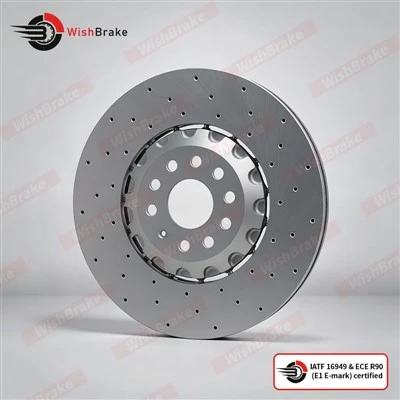
If you’re working on a brake job and have questions about OE rotors, whether you need pairs or individual units, or just want to make sure you’re getting the right parts for your vehicle, I’m here to help. My team has decades of experience with OE brake parts, and we can walk you through part numbers, side specifications, and best practices for brake repairs. Don’t guess when it comes to brakes—they’re the most important safety feature on your vehicle, and using the right paired OE rotors can make all the difference.
High Performance Brake Rotors References:
- National Highway Traffic Safety Administration. (2020). Brake System Safety Standards for Passenger Vehicles. U.S. Department of Transportation.
- Automotive Brake Industry Association. (2021). OE Rotor Design and Manufacturing Specifications. Technical Report No. ABIA-2021-004.
- Society of Automotive Engineers. (2019). Brake Rotor Performance and Compatibility Guidelines. SAE International Standard J2977.
- Original Equipment Suppliers Association. (2022). OE Parts Supply Chain and Packaging Practices. Industry Brief.
Qingdao Wish Auto Parts Co., Ltd.
Qingdao Wish Auto Parts Co., Ltd. is one of the most professional oe brake rotors manufacturers and suppliers in China. We are committed to providing high quality customized automotive brake discs with competitive price. Welcome to wholesale CE approved oe brake rotors in stock here and get quotation from our factory. 1 year warranty is available.
Address: No.45 Pengwan Road, Qingdao, Shandong Province, China
E-mail: SALES@wishbrake.com
WebSite: https://www.wishbrakeparts.com/
