If you’ve ever stood at the edge of a cemetery at dusk, the quiet stillness of the space—where generations rest, and families come to remember—feels like something almost sacred. But here’s a truth many don’t talk about: a cemetery isn’t just a place of memorial. It’s a site that needs practical, thoughtful protection too. As a perimeter fencing supplier who’s worked with small town cemeteries, historical burial grounds, and even large municipal memorial parks across the country, I’ve spent years fielding the same question: What’s the best perimeter fencing for a cemetery? It’s not a question with a one-size-fits-all answer. It depends on context, needs, and the unique story of the space you’re protecting. Let’s break this down like we’ve broken down hundreds of fence projects before—no fancy industry jargon, just real-world lessons from the field. Perimeter Fencing
First, I want to start with what makes cemetery fencing different from fencing for a backyard, a farm, or a commercial warehouse. Backyard fences are for keeping kids and dogs in; warehouse fences are for keeping inventory and unauthorized people out. Cemetery fencing has to do three jobs at once, none of which can take away from the solemnity of the space. It has to secure the grounds from trespassers, vandals, and animals that might damage headstones or memorials. It has to be respectful—no loud, bulky, or garish materials that clash with the quiet dignity of a place where people grieve. And it has to be low-maintenance, because cemetery boards, groundskeepers, and family members don’t have time to paint or repair a fence every other year. Those three pillars—security, respect, durability—are non-negotiable. Every fence we’ve specified for a cemetery has had to check all three boxes, and the best choice will shift based on the type of cemetery.
Let’s start with the most common scenario: a small, community cemetery tucked in a rural or suburban town, often decades or even centuries old, with tight, winding rows of headstones and a tight budget. I’ve worked on dozens of these, and more often than not, galvanized steel chain-link fence is a perfect fit—if you choose the right gauge and height. Wait, I know what you’re thinking: chain-link sounds industrial, like something you’d see around a baseball field, not a graveyard. But modern galvanized chain-link is nothing like the rusty, flimsy fence your neighbor had in the 1980s. We use 11-gauge galvanized steel for cemetery applications—not the thinner 12.5-gauge you might use for a backyard fence. It’s strong enough to stop a vandal from climbing over, or a deer from pushing through, which is a huge win for rural cemeteries where deer will nibble on landscaping and knock over small headstones if given the chance.
The trick to making chain-link work for a cemetery is finishing it right. We don’t leave it plain silver. We powder-coat it in a muted dark green or black, a color that fades into the trees and the landscape instead of standing out like a sore thumb. We also cap all the top rails and posts with smooth, plastic or galvanized caps—no sharp edges that could catch a grieving family member’s clothing, or look unsightly. For the height, we usually go with 4 feet to 5 feet, which is tall enough to deter casual trespassers but short enough that it doesn’t block the view of headstones or disrupt the open, respectful feel of the cemetery. We never go higher than 6 feet for small community cemeteries—any taller feels like a prison, and that’s not the vibe you want for a space of memory.
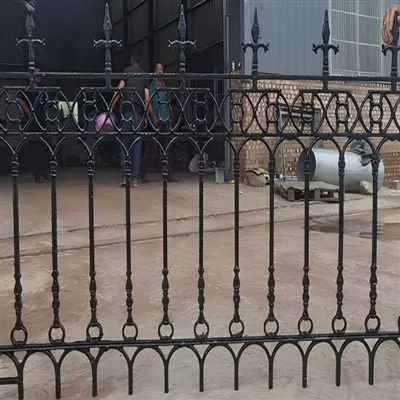
The big downside of chain-link? It’s not great for cemeteries that need to block line of sight entirely, especially historic ones where vandals or people looking to do harm will park outside and target the grounds at night. That’s where another popular option comes in: ornamental aluminum fencing. I’ll be honest, I used to recommend ornamental iron exclusively for historic sites, but aluminum has transformed that space. Iron is strong, but it’s heavy, expensive, and prone to rust if it’s not properly sealed—big problems for a cemetery that’s in a humid or snowy climate, where salt and moisture eat away at metal over time. Aluminum is lightweight, rust-proof, and infinitely customizable, which makes it perfect for cemeteries that want something that looks elegant, not utilitarian.
Ornamental aluminum for cemeteries is usually a picket style with pointed, rounded, or scroll-topped rails—we can even match the style of existing historic fencing if the cemetery is located in a historic district, which is a requirement for many small towns. The height for ornamental aluminum is usually 4 to 6 feet, same as chain-link, and we powder-coat it in dark bronze, black, or muted gray—colors that are understated enough to not distract from memorials, but solid enough to block line of sight from the street. It’s a bit more expensive than chain-link, but the maintenance is almost zero. We’ve installed aluminum fences on cemeteries 10 years ago that still look good as new—no sanding, no repainting, just a quick wipe down once a year to remove dust and fallen leaves. That’s a huge selling point for cemetery boards that have limited staff and budget for upkeep.
Now, if you’re dealing with a large municipal cemetery, a national historic memorial park, or a cemetery that’s located in an area with a lot of foot traffic, you need something that’s not just secure, but also built to last 50 years or more. That’s where vinyl (or PVC) fencing comes into play. A lot of people write off vinyl as flimsy and cheap, but modern commercial-grade vinyl is an entirely different product. The vinyl we use for cemeteries is 100% virgin PVC, no recycled materials, which means it’s UV-resistant, doesn’t yellow or crack, and can handle extreme temperatures—from the blistering heat of Arizona to the freezing cold of Minnesota. It’s also almost completely maintenance-free; the only time you’ll need to touch it up is if a car hits a section, and replacing a panel is as simple as snapping it back into place.
What makes vinyl great for large cemeteries is its versatility. We can make it look like a traditional wooden picket fence for small, quiet sections, or we can make it look like a solid privacy fence for areas that need maximum line of sight blocking. It’s also available in muted, earthy tones—dark green, gray, light tan—that blend perfectly with lawns and trees, unlike the bright white vinyl you see at many suburban homes. We’ve installed vinyl fencing on a 100-acre national cemetery in the South that has withstood hurricanes, summer heat, and decades of use, and it still looks just as good as the day it went in. The only caveat with vinyl is that it’s not as strong as steel or iron for large, intentional acts of vandalism—if someone tries to ram a car through it, it will likely give. But for deterring casual trespassers, animals, and minor vandalism, it’s unbeatable.
Wait, but what about wooden fencing? I get asked about this all the time. Some people swear by cedar or redwood fencing for cemeteries, because it has a warm, natural look that feels respectful. And they’re not wrong—wood can be a beautiful choice for small, rural cemeteries that want to lean into a rustic, historic vibe. But here’s the thing about wood: it rots. It warps. It attracts termites. It needs to be sanded, stained, and repainted every 3 to 5 years, which is a huge ongoing cost for most cemetery boards. I’ve seen a historic cemetery in New England that spent $15,000 a year maintaining its wooden fence, only to have a storm knock down a third of it in a single winter. For most cemeteries, wood just isn’t worth the long-term hassle—unless you have the budget and staff to commit to regular upkeep. If you do go with wood, go with pressure-treated pine or cedar, and seal it every 2 years. But in my experience, it’s a short-term solution for a long-term problem.
There’s one more factor that almost no one talks about when choosing cemetery fencing: the ground it’s going on. A cemetery’s ground is almost always uneven, especially older ones where headstones and graves are unevenly placed. A fence that works perfectly on flat suburban ground might sag or pull out of the ground if it’s installed on sloped or rocky terrain. That’s why we always custom-cut and fit every fence to the specific site, not just pick a prefabricated kit. For example, a cemetery in the hills of Tennessee has sloped ground along its front edge, so we installed our chain-link fence with telescoping posts that adjust to the slope, keeping the fence level and taut without sagging. For rocky ground, we use concrete footings instead of digging posts into the ground, which prevents posts from shifting when the ground freezes and thaws.
Security is obviously a big part of this, but I can’t stress enough how important respect for the space is. I once worked on a project where a cemetery board tried to install a 7-foot high aluminum fence with bright white powder-coat, and it looked like it belonged around a shopping mall, not a place where people come to grieve. We talked them down to 5 feet, switched to a dark bronze powder-coat, and added a few decorative elements that matched the old headstones at the cemetery, and they later told us it was one of the best decisions they made. The best fence doesn’t draw attention to itself—it fades into the background, so people can focus on the memorials and the memories, not the barrier around them.
Another lesson I’ve learned over the years: never cut corners on installation. A fence is only as good as its installation. I’ve seen people buy cheap chain-link from a big box store, hire a handyman to install it, and have it sag and rust within two years. For cemeteries, which are often public spaces that need to stand up for decades, you need professionals who know how to work around headstones and grave markers, who understand the importance of not disturbing the ground unnecessarily, and who can handle the unique challenges of cemetery property. We always coordinate with cemetery managers to avoid digging near existing graves, use non-damaging footings where needed, and install gates that are easy for groundskeepers to open and close, but secure enough to keep unauthorized people out.
Let’s wrap this up with real-world recommendations, based on the type of cemetery you’re managing. If you have a small, rural community cemetery with a tight budget and limited maintenance staff, go with galvanized chain-link powder-coated in dark green or black, 4 to 5 feet tall, with smooth capped posts and rails. It’s affordable, strong enough to deter trespassers and deer, and easy to maintain. If you have a historic cemetery in a historic district, or a suburban cemetery that needs to look elegant, ornamental aluminum is the way to go. It’s rust-proof, customizable, and comes in understated colors that complement any memorial style, with almost no maintenance required. If you have a large municipal or national cemetery, or a cemetery with high foot traffic that needs maximum durability, commercial-grade vinyl is the best bet. It’s built to last 50+ years, stands up to extreme weather, and is easy to repair if damaged.
At the end of the day, choosing the right perimeter fencing for a cemetery isn’t just about keeping people out. It’s about honoring the space. It’s about making sure that when a family comes to visit a loved one’s grave, they can do so in a space that is safe, quiet, and respected, without having to worry about a flimsy fence falling down or an eyesore distracting from the memorials. I’ve been in this business for 15 years, and I’ve installed fences for everything from small family plots to national veterans’ cemeteries, and that’s the principle that guides every project: the fence should serve the people who use the cemetery, not the other way around.

If you’re a cemetery manager, board member, or groundskeeper looking for a fence that fits your specific space, I’m here to help. We’ve worked with hundreds of cemeteries, big and small, and we can help you assess your space, your budget, and your needs to find the right perimeter fencing that balances security, respect, and durability. Reach out for a no-obligation consultation and quote, and let’s make sure your cemetery is protected the right way.
Steel Grid References
- National Association of Landscape Professionals. (2021). Cemetery Grounds Maintenance Best Practices.
- American Fence Association. (2022). Fencing Standards for Public Memorial Sites.
- USDA Forest Service. (2020). Durability of Wood and Vinyl Fencing for Rural and Suburban Applications.
- International Code Council. (2021). Recommended Security Standards for Burial Ground Perimeters.
Anping Chengshuai Slope Protection Engineering Manufacturer
As one of the most reliable perimeter fencing manufacturers and suppliers in China, we have world-leading production equipment and strong manufacturing capabilities. Please rest assured to buy cheap perimeter fencing for sale here from our factory. For price consultation, contact us.
Address: 200 meters east of Wanghulin Village, Anping County, Hengshui City, Hebei Province, China.
E-mail: elfwangwang@gmail.com
WebSite: https://www.chengshuaislopeprotection.com/
