What’s up, fellow electronics manufacturing crew? If you’re part of the supply chain for semiconductors, surface-mount devices (SMDs), or any tiny electronic component that needs precise handling, you’ve probably heard people throw around “single-row” and “multi-row carrier tape” like they’re interchangeable. Spoiler: they’re not. As someone who’s been in the carrier tape game for years—working with factories, SMT lines, and component distributors day in and day out—I’ve seen way too many teams mix these up and run into messy production delays, component damage, or even extra costs. Today, let’s break this down straight, no boring jargon, and explain exactly how these two tape types differ, when to pick which, and why getting it right matters for your bottom line. Carrier Tape
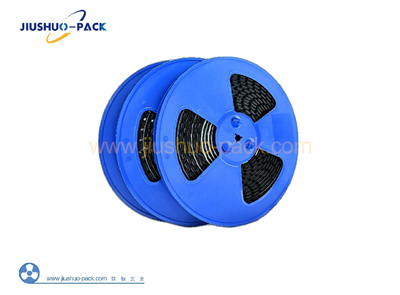
First, let’s keep it super basic: what even is carrier tape, anyway? For the uninitiated, it’s that plastic strip with little pockets (called “embossments”) that hold SMDs, connectors, resistors, capacitors, or any small part you feed into a surface mount technology (SMT) pick-and-place machine. It’s paired with a cover tape on top to keep parts from falling out during transport or storage. Without the right carrier tape, your pick-and-place machine can’t grab parts reliably—simple as that.
Now, the big split: single-row vs. multi-row. Let’s start with the one you’ll see way more often, especially for standard small components: single-row carrier tape. Just like it sounds, this tape has one single line of pockets running down its entire length. The EIA (Electronic Industries Alliance—old school, but still the standard for tape specs) sets the rules here: single-row tape follows standards like EIA-481, which means it’s 13.3mm (0.524 inches) wide for the most common size, with pockets spaced every 4mm, 8mm, or 12mm depending on the part size.
What’s so good about single-row? For starters, it’s the workhorse of the industry. Most standard SMDs—like 0402 resistors, 0603 capacitors, small diodes, even tiny ICs up to a certain size—fit perfectly into single-row pockets. It’s cheap, easy to source, and works with every pick-and-place machine ever made. Wait, every? Yeah, almost all SMT lines are set up to handle single-row tape without any modifications. You don’t need to adjust feeders, no extra setup time, no chance of your machine misaligning because the tape’s layout is off. Also, because it’s simpler in design, single-row tape is lighter, easier to cut, and generally has a lower per-unit cost than multi-row. That’s a win for bulk parts you’re moving in high volumes—like mass-produced phone chargers, IoT sensors, or automotive components that you crank out millions of a month.
But here’s where multi-row comes in: sometimes, you’ve got parts that are too big, or you need to cram more units into the same space to cut down on how often you have to reload feeders. Multi-row carrier tape has two, three, or even four parallel lines of pockets running down the tape. So instead of one row, you’ve got two or more, all aligned so the pick-and-place machine can grab parts from either row without switching feeders. For example, if you’re working with larger components like USB connectors, small memory modules, or sensors that are too wide to fit comfortably in a single-row pocket, multi-row lets you pack two parts side by side. That doubles the number of parts per foot of tape, which means you’re reloading your feeder half as often. For high-volume production, that saves so much downtime—every minute a pick-and-place is idle costs you money, right?
Wait, let’s get specific on the sizes, because that’s where people mess up. Single-row EIA-481 tape is 13.3mm wide, total. If you go to a two-row multi-row tape, it’s usually 25.4mm (1 inch) wide—exactly double the width of single-row. Three-row is around 38.1mm, four-row 50.8mm. Each row has its own pocket spacing, so the machine’s pick head can target row 1, then row 2, without moving the feeder or the tape. That’s the key difference in functionality: multi-row is built to maximize parts density, while single-row is built for compatibility and simplicity.
But let’s talk about trade-offs, because nothing’s perfect. Multi-row tape isn’t for everyone. First, it’s way more expensive to manufacture. You’ve got to mold two, three, or four sets of pockets in the same strip, so tooling costs are higher, and per-unit price is 20-50% more than single-row for the same pocket size. Also, not all pick-and-place machines can handle multi-row tape. Some older feeders, or machines with smaller feeder banks, only support single-row. If your line can’t adjust to multi-row, you wasted that extra money for nothing. Another big issue: component accessibility. Wait, what? Because multi-row has two pockets side by side, if the parts aren’t seated perfectly (say, a slightly off-center embossment), the pick head might grab the wrong part—like from row 2 instead of row 1. I’ve seen that happen way too many times: a production line stops because a pick head grabbed a 1mm capacitor meant for the second row instead of the first, which is a $0.01 mistake that costs $10,000 in downtime. Single-row? Only one row to mess up, way lower risk of picking errors.
Also, think about storage and transport. Single-row tape is thinner, lighter, and takes up less space in your warehouse or on shipping pallets. Multi-row is bulkier, so you can’t fit as many rolls on a single pallet. That means higher shipping costs, and more storage space needed. If you’re not moving super high volumes, those extra costs add up quick.
Wait, let’s throw in a real example to make this concrete. Last year, a customer of mine who makes wearables came to me. They were using single-row tape for their 0603 resistors, but they were reloading feeders every 2 hours, which slowed their line. I suggested two-row multi-row tape for those resistors—same part size, just two rows. Their reload time went to every 4 hours, so their line output went up 15% that week. But another customer, who makes custom PCBs for small-batch aerospace projects, didn’t make the switch. They told me their pick-and-place machine was a 10-year-old model that couldn’t handle multi-row feeders, so even if it was cheaper, they couldn’t use it. That’s the key: it all comes down to your production setup and your part requirements.
Another thing: pocket design. Single-row pockets are usually designed to hold parts from 0.4mm up to around 10mm, depending on the tape size. Multi-row pockets, since they’re side by side, are a bit narrower each, so they work best for parts under 8mm usually. If you have a part that’s 9mm wide, a single-row tape will hold it in a wider pocket, while a multi-row tape would have to have two rows of smaller pockets, which might not fit. That’s another good rule of thumb: if your part is smaller than 8mm and you’re running high volume, multi-row could save you money. If your part is larger, or your line is old, stick to single-row.
Wait, let’s also clear up a common myth: people think multi-row is only for high-volume, but that’s not totally true. If you’re doing low-volume runs but you need parts that are too big for single-row, multi-row might be your only option. But for low volume, the extra cost is usually not worth it. Another myth: multi-row is always less reliable. No, if it’s molded correctly, same as single-row, the cover tape seals just as tight. The issue is just compatibility with machines, and the risk of picking errors if the alignment is off.
So how do you pick the right one? Let’s make a quick cheat sheet, based on what I tell every customer:
- If your pick-and-place machine can’t handle multi-row feeders: use single-row, no exceptions.
- If your parts are standard SMDs (0201, 0402, 0603, 0805) and you run high volume (10k+ parts a month): check multi-row—you’ll save on reload downtime.
- If your parts are larger than 8mm, or custom parts like connectors or sensors: stick to single-row, because multi-row pockets won’t fit right.
- If you’re on a tight budget for small-batch runs: single-row is way cheaper, so go with that.
Now, I should mention—we test every single one of our carrier tapes before they leave the warehouse. We don’t just mold it and ship it; we run test picks with common SMT machines to make sure the pockets are aligned, the cover tape peels off at the right tension, and parts don’t fall out during transport. That’s why so many customers come back to us—we don’t cut corners, even when it’s a standard single-row roll.
Wait, let’s get back to the common mistakes I see. Last quarter, a customer ordered multi-row tape for a line that only had single-row feeders. They wasted $2,000 on rolls they couldn’t use. Another customer ordered single-row tape for large USB connectors, and the pockets were too small, so 10% of the parts fell out during transport—costing them $5,000 in returned goods. That’s the kind of avoidable mistake that comes from not knowing the difference.
So, if you’re reading this and you’re not sure which one you need, the worst thing you can do is guess. Send over your part specs (size, weight, quantity), your pick-and-place machine model, and your production volume, and we’ll help you figure it out. We don’t just sell you tape—we’re here to make sure your line runs smoothly, no delays, no extra costs.
At the end of the day, the difference between single-row and multi-row carrier tape is pretty simple: single-row is for compatibility and low cost, multi-row is for higher volume and less downtime, but only if your equipment can handle it. There’s no “better” one—just the right one for your specific setup.
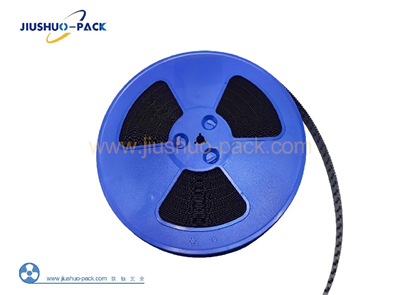
If you’ve been dealing with production delays from bad tape, or you want to test a better carrier tape that’s aligned with your parts and line, hit us up. We can send you free samples, walk you through specs, and help you pick exactly what you need to keep your SMT line running.
Cover Tape References
- Electronic Industries Alliance (EIA). (2019). Standard for Embossed Carrier Tapes for Surface Mount Devices, EIA-481-D.
- Surface Mount Technology Association (SMTA). (2022). Best Practices for Carrier Tape Selection and Feeder Compatibility.
- International Organization for Standardization (ISO). (2021). Packing of Small Electronic Components for Transport and Handling, ISO 16035:2021.
Dongguan Jiushuo Industrial Co., Ltd.
As one of the most professional carrier tape manufacturers and suppliers in China, we also support customized service. Please feel free to buy high quality carrier tape made in China here from our factory. Contact us for more details.
Address: 11th Floor, Building 2, Chuangfu Center, Chashan Town, Dongguan City, Guangdong Province, China
E-mail: sales06@zaidaiw.com
WebSite: https://www.carriertape-pack.com/
