Hey everyone, it’s Jake from the EU Standard Plug Pin team – thanks for stopping by my little corner of the web. I get so many DMs and support emails lately that go something like this: “Quick question, can I use an EU standard plug pin with a power strip?” And honestly, I don’t blame you for asking – I’ve seen way too many people grab whatever parts lie around the workshop or stockroom and cross their fingers, and that’s how you end up with wonky plugs that won’t slot in, or even worse, a sketchy electrical hazard. Let’s break this down like we’re chatting over a coffee, no jargon, just real talk from someone who’s been sourcing, testing, and shipping these pins for over 7 years. Eu Standard Plug Pin
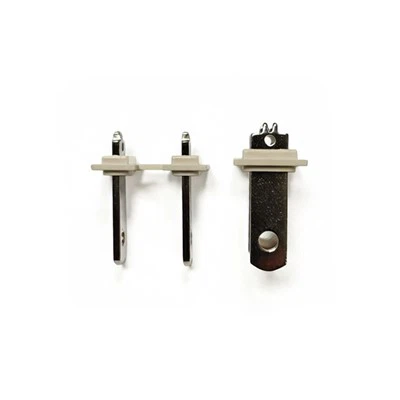
First, let’s get the basics out of the way so we’re all on the same page. The EU standard plug pin – you know, the two round, 4.8mm pins spaced 19mm apart, right? That’s the Schuko? Wait no, hold up, easy mix-up here. Schuko is the type with two round pins plus a grounding clip at the bottom, but the basic EU domestic plug pin we supply for all those standard household devices is 4.8mm diameter, 19mm center-to-center distance, no extra clip, for low-voltage (230V) residential use. Power strips, on the other hand, have their own pin receivers molded right into their casing – usually matched to whatever plug type the power strip is designed for. So at first glance, it seems like a straight swap, right? But here’s where most people mess up: it’s not just about size, it’s about fit, electrical rating, and safety standards. Let’s dive into each part.
First, fit. I can’t tell you how many times a customer emails me saying, “I bought your EU standard plug pins and they don’t fit my power strip.” Usually? They grabbed the wrong diameter pin. The tiny, low-current pins you’d find on phone chargers or old Christmas lights are 4mm, not 4.8mm. That’s a common mix-up – most people just think “EU plug pin” is one size, but nope. If you buy a 4mm pin and cram it into a power strip’s 4.8mm hole, either it won’t go in at all, or it’ll wiggle loose. Loose connections are bad news because they cause resistance, which heats up the pin, the socket, and even the power strip’s wiring. Over time, that heat can melt plastic, cause a short, or start a fire. But if you get the exact 4.8mm EU standard plug pin that’s matched to the power strip’s receiver? That’s the first box checked.
Wait, but what if you’re modifying a power strip? Like, say you have a bunch of old power strips with broken plugs, and you want to replace the pins? That’s totally doable, but you can’t just jam any pin in there. The power strip’s receptacle is engineered to hold a pin that’s exactly 4.8mm, with a certain length (usually around 8-10mm for residential power strips) so it makes full contact with the internal wires. If your pin is too short, it won’t reach the contact points inside the power strip, so you’ll get no power at all. Too long? It might poke through the other side of the power strip’s casing, which is a shock hazard – especially if there are other exposed parts nearby. I always tell my regular customers who do modifications to measure the existing pin before ordering, or if they’re starting from scratch, check the power strip’s specs to confirm the pin dimensions they need.
Next, electrical rating. This is the part that even some electricians overlook, honestly. EU standard plug pins aren’t one-size-fits-all when it comes to how much current they can carry. Most of the standard pins we supply are rated for 16 amps, which is perfect for regular household power strips that handle small things like laptops, lamps, coffee makers, etc. But if you’re using a power strip that’s designed for high-current appliances – like space heaters, air conditioners, or power tools that draw 10+ amps – you need a pin rated for that higher load. If you grab a standard 16A pin and try to run a 20A device through it? The pin will overheat, even if it fits perfectly, because it can’t handle the amount of electricity flowing through it. That’s a huge safety risk. I make sure every product listing on our site clearly states the amp rating, so people don’t have to guess – that’s why so many repeat customers come back, they know we don’t cut corners on that.
Now, the elephant in the room: safety standards. I’ve had a few customers ask, “Can I use a random pin I found in my garage from an old appliance?” and my answer is always, “Maybe, but only if it’s certified.” The EU has strict standards for plug pins – EN 50075 is the main one for standard round pins, right? That covers everything from diameter, spacing, material (it’s usually brass, but with a tin or nickel plating for corrosion resistance), and current rating. Random pins from old appliances might not meet that standard – they could be made of thin, cheap metal that bends easily, have a wrong diameter, or not be rated for the current you’re using. Even if it fits, a non-certified pin can cause issues like arcing – that little spark you see when you plug something in – which over time wears down the pin and the power strip’s socket, leading to more heat and failure.
Wait, let’s get specific to power strips too. Power strips themselves have their own certifications – usually CE marked for the EU, maybe UL if they’re for export, but even then, they have to work with certified plugs. If you’re using an EU standard plug pin that’s not compatible with the power strip’s certification, that could void the power strip’s safety rating. So even if your pin fits and has the right rating, it has to be designed to work with the power strip’s internal wiring and components. That’s why a lot of manufacturers don’t let people modify their power strips with third-party pins – it’s a liability thing, but honestly, it’s a safety thing too. I always tell people: if you’re modifying a power strip, stick to pins that meet EN 50075, and check the power strip’s max current rating to match.
Let me throw in a real example from last month, because that’s how I learn the most. A customer from Berlin messaged me panicking, said he modified a 10-year-old power strip for his workshop, used a random old pin from a vacuum, and it kept shorting out. He told me the pin fit, he thought it would work, but when he tested it, it only powered his drill for 5 minutes before the power tripped. I asked him what the pin’s diameter was – turns out it was 4mm, not 4.8mm, so even though it “seemed” to fit, the contact was bad, so the power strip’s internal breaker kept kicking. He ordered a pack of our 4.8mm, 16A certified pins, swapped them out, and hasn’t had an issue since. That’s exactly the kind of thing I’m talking about – it’s not rocket science, but small details make all the difference.
Another thing: corrosion. Power strips are often used in areas where they get dusty, maybe a bit humid – like workshops, kitchens, even outdoor patios if you’ve got an extension cord set up. The EU standard plug pin’s plating matters here. Cheaper pins skip the nickel or tin plating, so they’ll rust or tarnish over time. That corrosion creates resistance, just like a loose connection, which leads to heat and potential failure. All the pins we supply have a clear nickel plating, so they stand up to moisture and dust way better than the cheap no-name ones you find on Amazon or at the discount hardware store. We test every batch for corrosion resistance, so our customers don’t have to worry about that long-term.
Wait, what if you’re traveling? A lot of people ask me that too – like, “I have an EU power strip, can I use a UK plug pin with it?” No, that’s totally different. UK plugs have three rectangular pins, so that’s not even close. We only deal with EU standard round pins, so keep that in mind. The question here is specifically EU plug pin with a power strip, so we’re sticking to that.
Let’s recap so this is easy to follow. Short answer first: Yes, you can use an EU standard plug pin with a power strip, but only if three things are true: 1) The pin’s dimensions (4.8mm diameter, correct length) match the power strip’s receptacle, no forcing it. 2) The pin’s current rating matches or exceeds the power strip’s maximum load. 3) The pin is certified to EU safety standards (EN 50075) to avoid corrosion, poor conductivity, or safety hazards. If any of those three are off, you’re taking a risk with your devices and your home.
I get why people cut corners, too. Maybe you need a pin last minute, don’t want to run to the store. Or you’re modifying an old power strip and don’t want to buy a whole new one. But trust me, spending 2 minutes checking the specs is way better than dealing with a melted power strip or, worse, a fire. We’ve had customers tell us they saved hundreds in equipment damage because they used the right pins – one guy had a power drill that was overheating, turned out he was using a pin rated for 10A for a 15A drill, swapped to our 16A pins and the problem went away. That’s the kind of stuff we care about, not just selling pins – making sure people stay safe.
Now, if you’re reading this and you’re working on a project, modifying a power strip, restocking for your workshop, or just need replacement pins for broken plugs, I’m here. I don’t do flashy ads, I don’t oversell stuff – if you need help figuring out what pin you need, just reach out. We have bulk packs for electricians and small businesses, small packs for DIYers, all certified, all sized exactly to EU standards. No guessing, no weird corners cut, just reliable pins that work when you need them.
Wait, one last thing I should mention: never use a pin that’s damaged. If it’s bent, scratched, or the plating is chipped, throw it out. Even if it fits, damage weakens the metal, creates gaps, and leads to heat. I’ve seen a bent pin that someone tried to straighten with pliers – that warped the metal, made it too thin in spots, and it melted halfway through a laundry room appliance. Don’t do that. If a pin is damaged, replace it. That’s not negotiable.
At the end of the day, electrical safety isn’t something to mess around with. A lot of people see plug pins as a tiny, trivial part, but they’re the connection between your device, your power strip, and your home’s wiring. Get that wrong, and you’re putting everything at risk. But when you use the right EU standard plug pin, matched to your power strip’s specs, certified, and in good condition? It works perfectly, no issues, no risks.
If you need anything – whether it’s a small test pack to see if our pins fit your power strips, bulk orders for your business, or just questions about dimensions or ratings – hit us up. I’d rather answer 10 questions than have a customer have a bad experience because they used the wrong part. That’s how we do things here.
Wait, before I go, a quick note: this is all based on residential EU use, right? If you’re in a commercial setting, power strips for heavy machinery, that’s a different ballgame, and we can help you source pins rated for industrial use too – just mention that when you reach out. But for regular home use, laptops, lamps, kitchen appliances, standard power strips? The basics we covered apply.
Don’t forget to double-check everything before plugging in. Measure, check ratings, confirm certification. It takes 5 minutes, and it’s way better than dealing with the aftermath of a preventable issue. Alright, that’s my ramble for today. If you got this far, thanks for listening, and feel free to reach out with whatever plug pin questions you have.
Uk Standard Plug Pin References:
- European Committee for Electrotechnical Standardization. (2019). EN 50075: Plugs and socket-outlets for domestic and similar general use – Standardized plugs with pins of 4.8 mm diameter.
- International Electrotechnical Commission. (2021). IEC 60884-1: Plugs and socket-outlets for household and similar purposes – Part 1: General requirements.
- European Fire Safety Association. (2022). Electrical hazards from improper plug and socket connections in residential settings.
Dongguan Fangrun Metal Products Co., Ltd.
We’re well-known as one of the leading eu standard plug pin manufacturers in China, specialized in providing high quality customized products. Please feel free to buy discount eu standard plug pin made in China here from our factory. For quotation and free sample, contact us now.
Address: New Town Industrial Zone,Xiegang Village,Xie Gang Town,Dongguan City
E-mail: 825556703@qq.com
WebSite: https://www.fangrunpin.com/
