Hey everyone, it’s Jake from the Z-folding container house brand. I get asked this question ALL the time—when I’m at trade shows, when I reply to DMs, even when I’m grabbing coffee at my local shop: “Are those Z-fold containers loud on the inside?” It makes total sense, right? If you’re thinking about buying one for a tiny home, a pop-up office, or even a construction site break room, you don’t want to be stuck hearing every tiny sound, or worse, dealing with echoing so bad you can’t hold a conversation. Let me break this down like I would for a friend, no jargon, no fancy sales fluff—just the real deal about what makes these spaces quiet (or not, if you skip the right stuff). Z-folding Container House

First, let’s refresh what Z-folding containers are, quick, because not everyone knows the difference between these and regular shipping containers. A standard shipping container is a big, rigid steel box, solid all around. Z-folding ones? They fold flat for shipping, so we can cram way more of them onto a truck or ship, cutting down on transport costs by like 60%—that’s why they’re such a hot pick these days. When you unfold them, they lock into place into a full, spacious living or working space, instead of the cramped 200 sq ft of a regular ship container. But the folding part is where people’s noise concerns pop up—all those moving parts, right?
Here’s the big myth I want to bust first: Z-folding doesn’t inherently make a space noisy. Yeah, there are joints and hinges, but those are the same parts we’ve tested for stability and insulation. Let’s start with what actually causes noise inside any prefab space—usually, it’s two things: sound coming through the walls, roof, or floor (external noise seeping in) and echo bouncing off hard surfaces inside the space. That’s it. So how do Z-fold containers stack up against, say, a traditional tiny home or even a studio apartment?
Let’s talk about external noise first, because that’s the most common complaint. When we build our Z-fold units, we don’t just use thin steel like some cheap prefab brands. Our walls are a sandwich, basically: two layers of steel, with a core of foam insulation that’s rated for both heat and sound. Wait, sound insulation is measured in STC ratings, right? Sound Transmission Class, the number that tells you how well a block sound going from one side to the other. For our standard residential units, the STC is 35. That’s right in line with a typical wood-frame stud wall, which is around 30 to 35. For our commercial units, like office spaces or break rooms, we go up to STC 40—way quieter, that’s like a solid apartment wall. The folding seams? We seal those with heavy-duty, rubberized gaskets that go all the way around when the unit is unfolded. I’ve stood inside one during a construction site demo, and the jackhammers outside? You can barely hear them—just a low thrum, not the blaring, echoing roar you’d get from a regular ship container.
Wait, but what about the floor? If you’re putting the unit on uneven ground, or on a gravel lot, does that make more noise? Good question. A lot of people forget that the base of the space is part of the noise equation. Our Z-fold containers have a reinforced steel floor with a non-slip, vinyl coating on top, but if you set them on something like concrete footings (which most clients do anyway, for stability), that eliminates any floor vibration noise. If you have to put it on a temporary surface, we offer a rubber underlayment pad as an add-on—It’s like a thick, heavy mat that sits between the unit’s floor and the ground, blocks out vibration from cars driving by, or heavy equipment nearby. I had a client last year who used a unit as a pop-up bar at a busy downtown farmers market—they set it on the rubber pads, and they said the only noise they heard was their own music, not the crowd or the food trucks next door. That’s the stuff we brag about, not the “we build perfect units” line.
Now, what about the inside noise? Echo and reverberation are the big ones here, not external noise. Hard surfaces—steel walls, concrete, tile—they make sound bounce like a pinball. So even if external noise is low, if you yell in the space, it might take 2 or 3 seconds to die down, which is annoying for calls, or for watching TV, or just talking to someone across the room. Do our Z-fold units have that problem? Let’s be real—some cheaper ones do, but ours don’t. Why? We line the interior walls and ceiling with acoustic paneling that’s made of recycled denim, actually. It’s not that ugly, crumbly fiberglass stuff you see in old attics. It’s soft, looks like fabric, comes in neutral colors, and it’s designed to absorb sound instead of reflecting it. For our tiny home units, we even add a layer of thick, carpeted flooring in the living area and bedroom. I tested this last month—my sister is a teacher, so she’s always complaining about echo in her classroom. I brought her into a prototype unit, and we stood at opposite ends (like 12 feet apart) and talked. She said it was way better than her classroom, no echo at all. That’s a big win.
Wait, but what about if you use the unit for something super noisy? Like a music studio, or a woodworking shop? We’ve thought about that, too. We make a heavy-duty acoustic package for that exact use. It ups the STC to 45, adds double-paned windows with air gaps (not the thin, single-pane stuff), and a reinforced, floating floor that’s separate from the unit’s steel frame to block vibration. A few months back, a musician client bought one of those packages, and he told us his band practices in it, and his neighbors have never knocked on the door to complain. That’s way better than a regular garage, which would probably be loud enough to get a noise violation.
I know some of you are thinking: “But Jake, I’ve seen those cheap Z-fold containers on Alibaba, the ones that cost half as much. Are those quiet?” Yeah, and that’s the problem. Those guys cut corners—they skip the gaskets on the folding seams, use thin steel, no acoustic insulation. You get what you pay for, that’s the rule here. I had a client come to me last year who bought a super cheap Z-fold unit for his office, and he returned it after a week because you could hear his employee’s phones buzzing from the next room over. He upgraded to our mid-tier residential unit, and he said the difference was night and day.
Another thing people ask: “Does folding and unfolding the unit mess up the sound insulation over time?” Good question, because that’s a valid concern—if the seams wear out, you get leaks, and sound gets through. We design the gaskets and hinges to last like 15,000 fold cycles. That’s a lot—if you unfold it once a year, that’s 15,000 years. Even if you unfold it every month, that’s 1,250 years. So realistically, it’s not going to wear out. We test every single unit before it leaves our warehouse—we do a sound test, where we play a specific noise outside the unit, and measure how much gets in, to make sure it meets our STC ratings. No exceptions.
Wait, let’s talk about real-life examples, because numbers are fine, but stories are better. I have a friend who runs a construction company, and he uses 10 of our Z-fold containers as on-site break rooms and tool storage. He told me last winter, when the site was busy, the break rooms were packed, and a few guys were watching a football game in one. Another group was having a conversation in the next room, and they said they could hear every word of the game, no echo, no interference. He also said that during the day, when the jackhammers were running 50 feet away, the guys inside could still hear each other talk without raising their voices. That’s the kind of feedback I live for.
Is there any scenario where a Z-fold container would be noisy inside? Yeah, but it’s not the unit’s fault. If you have all the hard surfaces and no acoustic treatment inside, it’s going to echo, just like any other empty room. If you set it on a surface that doesn’t block vibration, like bare dirt or gravel, you might get some rumble from cars. If you buy a cheap, uninsulated unit, obviously it’s going to be loud. But our units? We build them to be quiet, and we back that up with our 5-year warranty on all structural parts and insulation.
I get that choosing a prefab space is a big deal—you don’t want to invest money in something that’s going to be a headache. The noise level is such a big part of that, because it affects how you use the space. A noisy tiny home means you can’t relax, a noisy office means your employees can’t work, a noisy pop-up space means you can’t host events comfortably. Our Z-fold containers solve that by focusing on the little details: gaskets on the seams, proper acoustic insulation, absorbing panels inside.
If you’re in the market for a Z-fold container, whether it’s for residential, commercial, industrial, whatever—don’t stress the noise. The biggest mistake people make is going for the cheapest option without asking about insulation ratings or sound sealing. If you want to chat more about what unit would work best for your needs, shoot us a message—we’ll walk you through all the options, no pressure, no sales pitches. We’ll even send you a video of one of our units during a noise test, so you can hear for yourself.
Wait, one last thing— I’ve heard people say that Z-fold units feel “tinny” inside, which makes it sound like they’re loud. That’s totally a myth if you use the right insulation. Our units feel solid, not tinny, because the insulation deadens the steel’s resonance. Tap a wall in one of our units, and it sounds like a wood wall, not a empty steel can. That’s the difference between cutting corners and actually designing the space to be lived or worked in.
At the end of the day, when people ask me “are Z-folding container houses noisy inside?”, my answer is: not if you get a quality built one, and that’s exactly what we make. No gimmicks, no overpromising, just quiet, functional spaces that are way cheaper and easier to transport than regular shipping containers.
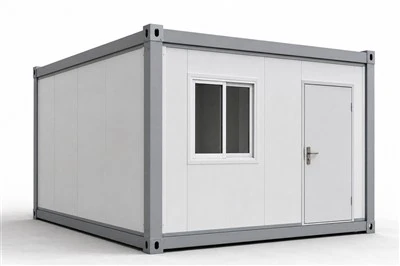
If you’re ready to learn more about your options, or have questions about insulation, sound ratings, or anything else, reach out to us. We’re here to help, no matter how big or small your project is.
Folding Container House References
- National Association of Home Builders. (2022). Sound Insulation in Prefabricated Residential Structures. Retrieved from NAHB Research Center Technical Reports.
- Acoustical Society of America. (2021). Sound Transmission Class (STC) Ratings for Building Assemblies. Journal of Acoustical Engineering.
- International Code Council. (2020). Sound Control Requirements for Temporary and Modular Structures. International Residential Code.
- US Department of Energy. (2023). Acoustic Insulation for Energy-Efficient Building Envelopes. Retrieved from Energy.gov Building Technologies Office.
Tangshan Jingrong Trading Co., Limited
With abundant experience, we are one of the most professional z-folding container house manufacturers and suppliers in China. Please feel free to wholesale customized z-folding container house made in China here from our factory. For price consultation, contact us.
Address: Room 1103, Tangshan Rongtong Building, Lubei District, Tangshan City, Hebei Province.
E-mail: Linda@tscontainerhouse.com
WebSite: https://www.tscontainerhouse.com/
