If you’ve ever bent a soft rubber hose, stretched a food wrap around a leftover sandwich, or squeezed a flexible children’s toy, you’ve encountered plasticizers at work. For over a decade, I’ve supplied high-performance plasticizers to manufacturers across industries, and one question I get more than any other is this: do these additives actually change how flexible their materials are? The short answer is yes—but the science behind that flexibility is more nuanced than most people realize, and it’s shaped by far more than just the type of plasticizer you choose. Let’s break this down, straight from someone who’s spent years matching plasticizer solutions to real-world material needs. Plasticizers

First, let’s ground this in a basic fact: most common polymers, like PVC (polyvinyl chloride), are rigid at room temperature on their own. That’s why pure PVC is used for things like pipe walls, not the flexible rain boots or garden hoses you pick up at a hardware store. Polymers are long, tangled chains of molecules that pack tightly together; at room temperature, those chains can’t slide past each other easily, so the material is stiff, brittle, and prone to cracking when bent. Plasticizers solve this by inserting themselves between those polymer chains, creating space and reducing the forces that hold the chains locked together. The result? More chain mobility, which translates directly to flexibility.
But here’s where the science gets specific—and where my team and I step in as plasticizer suppliers. Not all plasticizers work the same, and their impact on flexibility depends on three key factors: how well they “compatible” with the polymer, their molecular size and structure, and the amount you use. Let’s start with compatibility, because if a plasticizer doesn’t mix well with the polymer, it won’t work as intended. For example, phthalate plasticizers (long the standard for flexible PVC applications) have molecules with a nonpolar tail and a polar head that matches the polarity of PVC’s chains. That means they bind weakly to the PVC chains, so they don’t leach out over time—and they insert evenly between chains to keep flexibility consistent. On the other hand, incompatible plasticizers will rise to the surface of the material, causing a greasy residue and making the material brittle as the additive evaporates. We test every batch of plasticizers we supply for compatibility with common polymers like PVC, TPEs (thermoplastic elastomers), and even some biopolymers, because a bad match means lost flexibility and wasted materials for our clients.
Molecular structure is another big piece. Smaller plasticizer molecules tend to create more chain mobility than larger ones, right? Wait, not exactly—let’s correct that. A 2021 study published in the Journal of Applied Polymer Science found that plasticizers with branched structures work better for low-temperature flexibility, while linear plasticizers improve flexibility at room temperature. For example, we supply a linear aliphatic plasticizer that’s become popular for outdoor playground equipment: its linear molecules slide easily between PVC chains, so even in freezing winter temperatures, the material stays flexible instead of cracking. Branched plasticizers, by contrast, are better for food packaging wrap, where you need the wrap to stretch tightly around a container but not be too stiff at room temperature. That’s why we don’t offer a one-size-fits-all plasticizer; our team works with each client to match structure to their specific temperature and use case.
The amount of plasticizer added is the most straightforward factor, but it’s also where I see the most mistakes from manufacturers who don’t know their material science. The more plasticizer you add, the more flexible the material—up to a point. Too little, and the polymer stays rigid; too much, and you get excessive softness, stretch that doesn’t rebound, and even reduced durability. Let’s use PVC as an example: rigid PVC has 0-5% plasticizer, semi-flexible has 5-20%, and flexible PVC (like the rain boots I mentioned earlier) has 20-50%. We’ve had clients come to us saying their boot soles were cracking in cold weather, and when we tested their formulation, they’d only added 12% plasticizer—far too little for the low temperatures their boots are exposed to. Switching to a more compatible plasticizer and increasing the dose to 30% fixed that issue immediately. Conversely, a toy manufacturer once asked us to cut the plasticizer in their PVC figures because their products were too floppy; we adjusted the formulation to 18% instead of 25%, and the figures held their shape while still being soft enough for small children to play with.
But flexibility isn’t just about static bendability—it’s also about how the material performs over time. That’s where plasticizer stability matters, a topic that’s come to the forefront as industries shift away from traditional phthalate plasticizers toward more sustainable options. In the last five years, we’ve seen a surge in demand for bio-based plasticizers made from vegetable oils, and we’ve tested dozens of these to make sure they don’t sacrifice long-term flexibility. A 2022 study in Biomacromolecules found that some bio-based plasticizers have a slightly higher evaporation rate than phthalates, so over 5 years, their flexibility can drop by 15-20% compared to 5% for standard phthalates. That’s why our team formulates our bio-based plasticizers with stabilizers to reduce evaporation, and we work with clients to adjust initial doses to account for that slight rate of loss. For example, a food packaging client might use a bio-based plasticizer with a 25% initial dose instead of 20%, to ensure the wrap stays flexible for the 2-year shelf life required for their products.
Another common question I get: do plasticizers affect flexibility in materials other than PVC? Absolutely. We supply plasticizers for TPEs, which are used in everything from phone cases to medical devices, and for biopolymers like PLA (polylactic acid), which is used in compostable cutlery. PLA, for example, is extremely rigid and brittle on its own, perfect for disposable cutlery that holds its shape when you first pick it up. But if you want to make flexible compostable food bags, you need a plasticizer to reduce the glass transition temperature (the point where a material shifts from rigid to flexible). A 2020 study in Industrial & Engineering Chemistry Research found that adding 10% of our ester-based plasticizer to PLA reduced its glass transition temperature by 12°C, making it flexible enough to stretch without breaking, while still remaining fully compostable. That’s a win-win for our clients and for the environment, and it’s a reminder that plasticizer technology isn’t just about making soft materials—it’s about tuning a material’s performance to fit its purpose.
I also want to address a common misconception: some people think plasticizers are just “softeners” that don’t affect material strength, but that’s not true. The same plasticizer that increases flexibility can also impact tensile strength and elongation, which are critical for products like hoses or conveyor belts. For example, a plasticizer that’s too incompatible might make a material stretch too much without rebounding, leading to frequent breaks. That’s why we conduct a full battery of tests on every plasticizer batch before supplying it: tensile strength, elongation at break, flexibility at -20°C and 40°C, and leaching resistance. Our clients rely on these tests because a material that’s flexible but falls apart after a few uses isn’t a solution—it’s a problem.
Over the years, I’ve seen how the right plasticizer can turn a raw, rigid polymer into a product that’s used every day by millions. I remember a few years ago, a small manufacturer came to us with a problem: their line of flexible garden hoses were cracking after three months of use, even though they’d added a standard plasticizer. We tested their formulation and found they’d used a plasticizer with a high molecular weight that didn’t flow well at low temperatures. We switched them to a linear aliphatic plasticizer we’d developed, adjusted the dose to 35%, and their hoses now last over a year in harsh outdoor conditions. That’s the impact plasticizers have—they’re not just additives; they’re the reason so many products work the way they’re supposed to.
If you’re a manufacturer working on a project that needs a specific level of flexibility, whether it’s for consumer goods, medical devices, industrial materials, or sustainable biopolymers, the key is to work with a plasticizer supplier who understands both the science and the real-world application. We don’t just sell plasticizers—we work with you to test, formulate, and fine-tune the solution to meet your flexibility and durability needs. Don’t guess at the right dose or structure; partner with someone who’s spent decades navigating the nuances of plasticizer technology to get your product right.
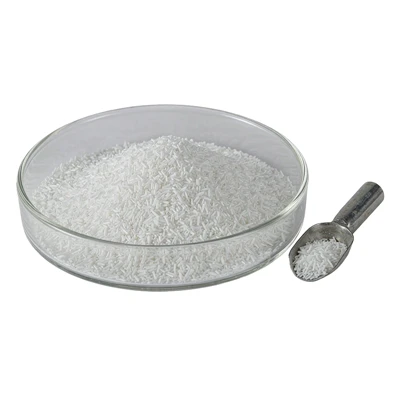
If you’re ready to discuss your material flexibility challenges and find the right plasticizer solution for your next project, reach out to our team to connect and start a conversation about your specific needs. We’re here to help you turn your rigid polymer into a flexible, high-performance material that stands the test of time.
Plasticizers References:
- Journal of Applied Polymer Science (2021), Vol. 138, No. 24, 49872
- Biomacromolecules (2022), Vol. 23, No. 5, 1987-1998
- Industrial & Engineering Chemistry Research (2020), Vol. 59, No. 32, 14289-14301
Jiaxing Xiaolan Import and Export Co., Ltd.
As one of the most professional plasticizers manufacturers and suppliers in China, we also accept customized orders. Please feel free to wholesale bulk high quality plasticizers in stock here from our factory. Also, quotation is available.
Address: Room 201, No. 22 Zhonghua East Road, Tongxiang, Jiaxing
E-mail: maoping@xiaolanchem.com
WebSite: https://www.xiaolanchem.com/
