Hey there! If you’ve ever sat in a dentist’s chair and gagged a little when that goopy, smelly putty tray got shoved in your mouth (guilty, I’ve definitely held my breath through more than one impression session), you know how big of a game-changer dental digital scanners are. I’m from a dental digital scanner supplier—we’ve been helping clinics ditch the messy old impressions for years, so I get all the questions people have about how these little magic boxes actually work. Let’s break it down without all the jargon, promise. Dental Digital Scanner
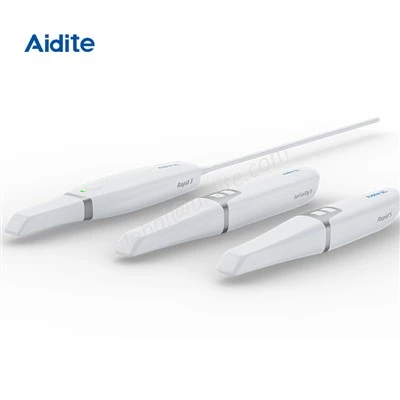
First off, let’s set the scene. A lot of folks think this tech is some high-flying, sci-fi stuff only used in fancy dental offices, but nah—it’s way more straightforward than you think. When I’m talking to a new dentist or office manager, I start with the basics: what’s the point of the scanner, anyway? Instead of mixing up alginate (that’s the gunk) in a tray, slapping it on your teeth, waiting for it to set, then shipping it off to a lab to make a model, a dental scanner uses a tiny camera and some smart software to take a 3D “picture” of your mouth in minutes, no mess, no gag reflex. That’s the big sell, right? But how does the machine pull off that 3D scan? Let’s get into the actual tech, but keep it casual.
Most scanners use what’s called “structured light” technology—wait, that’s not as scary as it sounds. Think of when you hold a flashlight up to a wavy surface and the beam looks bent and distorted, instead of straight. That’s basically what’s happening here, but way more precise. The scanner emits a thin, patterned line (usually red or blue, those are easy for cameras to pick up) onto your teeth and gums. Since teeth aren’t flat—they have bumps, grooves, little pits, all that—the light line warps and curves as it hits each surface. The scanner has two tiny built-in cameras, kind of like human eyes, that pick up that distorted line from two slightly different angles. Then the software does the heavy math: it calculates how much the light bent, how far each part of your tooth is from the scanner, and builds a super detailed 3D model of your whole mouth from all that data. No putty, no waiting, no weird taste in your mouth.
Wait, some scanners use another method too—confocal microscopy, right? That’s the one that uses lasers instead of a light pattern. It’s similar, but it scans way more slowly, taking tiny cross-section “slices” of your mouth and stitching them together into a 3D model. That’s actually great for super detailed work, like getting scans for veneers or small implants, but structured light is way faster for full-mouth scans, which is why most clinics use that these days. I always tell customers: pick the one that fits your practice, not the fanciest one.
Now, let’s talk about how the scanner actually uses that data once it has it. The second the scan is done (it takes like 2 minutes max, I’ve timed it), you see the 3D model pop up on the screen. The dentist can zoom in, rotate it, check for any missed spots (super important—no one wants to re-scan because the gum line was blurry), or even mark where a cavity is or where a crown needs to go. Once that model is perfect, the software sends the data straight to a 3D printer, which makes a physical model of your teeth in an hour, or sends the digital file straight to a lab to make a crown, bridge, or aligners. No more waiting days for a model to ship, no more lost impressions—digital files are stored safely, never get lost.
I know what you’re thinking: is this scan accurate enough? Let’s be real—if the model is off even a tiny bit, the crown won’t fit right, and no one wants a crown that rubs or hurts. The good news is that modern scanners are way more accurate than old putty impressions. I’ve heard lab techs say that a digital scan is often more precise than the goop, because alginate can shrink a little as it sets, and it can get distorted when you take the tray out of your mouth. Digital scans don’t have that problem. Our top-of-the-line scanners have a accuracy of 10 microns, which is like 0.01 millimeters—way smaller than a human hair. You can barely even see that tiny gap, so a crown made from that scan will fit perfectly.
Wait, let’s address the little hiccups. Every tech has flaws, right? Sometimes the scanner can pick up saliva or reflections on wet teeth and mess up the scan. That’s why the dentist will have you dry your mouth a little with a small suction tip before scanning, and sometimes they’ll have you bite down lightly to keep your tongue out of the way. It’s super quick, no big deal. Another thing: dark teeth or metal fillings? Those can sometimes reflect the light differently, but modern scanners have algorithms that fix that now. We spent months tweaking our scanners’ software to handle metal, and I can’t tell you how many calls we get back from clinics saying they used to mess up scans for patients with old fillings, and now they never have that problem anymore.
Now, let’s talk about why this matters for clinics. Before digital scanners, if a crown needed to be made, the dentist had to send the impression off to a lab, wait a week or two, then call the patient back to fit it. That meant more appointments, more hassle for patients, and more time the dentist had to wait. With a digital scanner, some practices can even make crowns right in the office in the same appointment—they scan, send the digital file to their on-site 3D printer, mill the crown from a block of ceramic, and fit it all in an hour. That’s a huge win for patient satisfaction, which is everything when you run a dental practice. No more “I have to come back next week” texts, no more patients forgetting their follow-up appointments.
Working as a supplier, I’ve talked to hundreds of dentists and office managers, and the number one question I get is: is this worth the investment? Let’s break it down. Sure, the scanner has an upfront cost, but think about the money you save in the long run. No more wasting money on messy alginate trays, no more redoing impressions because they’re bad, no more paying for rush shipping to get lab models. Plus, it makes your practice look way more modern—patients are always impressed when they see the 3D model of their teeth, instead of leaving with a weird taste in their mouth.
I’ll be honest, there was a time when digital scanners were really bulky and hard to use—like, dentists needed a whole week of training just to get the hang of them. But now? They’re super user-friendly. Our scanners have intuitive software that walks the dentist through every step of the scan, with little prompts if they’re missing a spot. You don’t need a fancy tech degree to use one. We offer free training for all our customers, and our support team is on call 24/7 if anyone runs into a glitch. No more being stuck with a machine you can’t figure out.
Wait, let’s clear up a common misconception: digital scanners are only for crowns and bridges. Nah, they’re used for so much more—implant planning, orthodontic aligners (Invisalign uses digital scans, for crying out loud), veneers, even making custom trays for whitening or night guards. I’ve had a pediatric dentist customer who uses our scanner to make little clear models of kids’ teeth to explain what a cavity is, which makes the kids way less scared. That’s a whole other benefit I didn’t even think about at first—using the 3D model to talk to patients, not just do the work.
Now, if you’re a clinic owner or dentist reading this, maybe you’re wondering which scanner is right for you. Every practice is different—smaller clinics might not need the top-of-the-line model that scans full mouths in 30 seconds, a pediatric practice might want a lighter, handheld scanner that’s easy for squirming kids, and multi-location practices might need scanners that integrate with their existing software. That’s why we work with every customer to figure out their needs, not just push the most expensive machine. We do demos, answer all your questions, and make sure you feel confident before you buy.
I get it, changing your practice’s workflow is a big deal. If you’ve been using putty impressions for 20 years, it’s hard to switch. But I’ve seen so many clients tell us within a month of getting our scanner that they’ll never go back. No more gagging patients, no more messy trays, no more waiting for lab models. It’s not just a tech upgrade—it makes your job easier and your patients happier.
At the end of the day, dental digital scanners aren’t some black box magic. They’re just smart tech that uses light and cameras to do a better, faster job than old-fashioned impressions. If you’re a clinic looking to make the switch (or just curious how they work), we’re here to help. We can walk you through the tech, answer all your questions, and get you set up with a scanner that fits your practice perfectly. If you’re ready to stop dealing with goop and start making your dental workflow smoother, reach out to us to connect and talk through all your needs.
3D Printer & Resin References:
- American Dental Association. (2021). Digital Impressions in General Dental Practice. Journal of the American Dental Association, 152(8), 624-632.
- Fehrenbach, M. J., & Popowics, T. (2022). Illustrated Dental Embryology, Histology, and Anatomy (4th ed.). Elsevier.
- World Dental Federation. (2020). Global Guidelines for Digital Dental Technology. FDI World Dental Federation Publications.
- van der Zel, J. M., et al. (2019). Accuracy of Intraoral Dental Scanners: A Systematic Review. Journal of Prosthetic Dentistry, 121(5), 747-755.
Aidite (Qinhuangdao) Technology Co., Ltd.
Aidite (Qinhuangdao) Technology Co., Ltd. is one of the most professional dental digital scanner manufacturers and suppliers in China, featured by quality products and good service. Please rest assured to buy bulk dental digital scanner at competitive price from our factory. Also, quotation is available.
Address: No.9 Dushan Road, Economic and Technological Development Zone, Qinhuangdao, Hebei Prov., China
E-mail: global@aidite.com
WebSite: https://www.aiditeglobal.com/
