When I started in the fire retardant insulation board supply business over a decade ago, I’ll admit I thought our main value was simple: keeping buildings safe from the rapid spread of flames. I’d been in the construction industry long enough to know how critical fire safety is, and for years, that’s all I focused on. Then, a client called me in a panic a few years back—he owned a 20,000-square-foot co-working space in a downtown office building, and after we’d installed our fire retardant insulation boards on his walls and ceilings, his employees complained the space felt dead. Conversations carried across open desks, conference calls were echoey, and even background music at his café corner sounded thin and tinny. He’d thought he was doing two good things at once: meeting fire code and improving acoustics. Instead, he was getting neither. That conversation flipped my entire approach. Since then, I’ve spent countless hours working with architects, acoustic engineers, and building owners to figure out exactly how our fire retardant insulation board affects a room’s acoustics—and how to balance fire safety without sacrificing sound quality. Fire Retardant Insulation Board
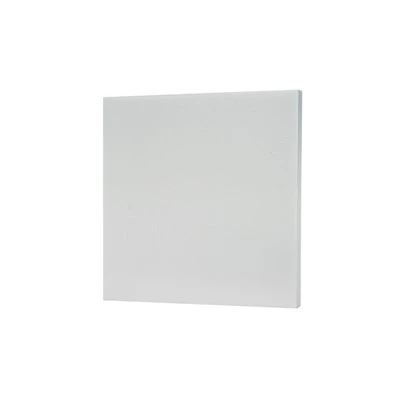
Let’s start with the basics most people overlook. Acoustics in a room boils down to three key factors: absorption, reflection, and diffusion. When sound is made—say, a person talking, music playing, or a printer whirring—it travels in waves. Hard, smooth surfaces (like concrete walls, metal ceilings, or glass) don’t stop these waves; they bounce them straight back, causing echoes or reverberation, which is that “empty room” sound that makes speech hard to understand. Soft, porous materials absorb those waves, turning the sound energy into a tiny amount of heat and softening reflections, making the space feel warm and comfortable. Fire retardant insulation boards, at their core, are designed to be porous and soft (in a rigid-sheet kind of way) to insulate against heat—so their structure inherently interacts with sound. But not all fire retardant boards are the same, and that’s where the confusion comes in.
Early on, I learned that the type of insulation core inside a fire retardant board makes all the difference. For example, some of our older fire retardant lines used compressed fiberglass as the core, coated with a thin fire-retardant layer. Those boards were great at absorbing sound because fiberglass has tiny air pockets that trap sound waves. But when the fire retardant coating was too thick, it sealed off some of those air pockets—so instead of absorbing sound, the coating turned the board’s surface into a hard, reflective barrier. That’s exactly what happened to that co-working owner. We’d used a cheaper coating to meet a tight deadline, and it killed the board’s acoustic performance. Since then, we’ve switched to a water-based, breathable fire retardant coat that bonds to the fiberglass without filling the porous spaces. That small change bumped our board’s Noise Reduction Coefficient (NRC)—a standard measure of how much sound a material absorbs—from 0.35 to 0.65. For context, a typical acoustic ceiling tile has an NRC of around 0.6, so that’s a huge jump, and it’s all because we adjusted the coating to keep the board’s core porous.
Then there’s the issue of room layout, which ties the board’s performance to how it’s installed. You could have the best fire retardant insulation board in the world, but if you nail it directly to a concrete wall without leaving an air gap, you’re almost back to square one. Sound travels through solid materials too—so when a board is pressed tight against a hard wall, the sound waves that aren’t absorbed by the board will pass through it into the wall, which vibrates and reflects the sound back into the room. We learned this the hard way when we installed boards in a small restaurant: their kitchen noise bounced off the tiled walls and the tight-fitting fire retardant boards, making the dining area loud and chaotic. The fix? Adding a 1-inch air gap between the board and the wall, using metal furring strips, created a decoupled system. The air gap stops vibration transfer, and the porous board absorbs the sound before it can bounce. In that restaurant, reverberation time dropped from 1.8 seconds to 0.8 seconds—ideal for a space where people need to hear each other without shouting. Decoupling isn’t just for soundproofing; it’s how you make the most of your fire retardant insulation board’s acoustic properties.
Another common mistake I’ve seen is people assuming thicker fire retardant insulation boards equal better acoustics. That’s not always true. For a small home office, a ½-inch fire retardant board might be enough to keep out exterior noise, but for a gym or a multi-room office, you’ll need 1-inch or thicker. But here’s the catch: too much thickness can lead to trapped low-frequency sound. Low frequencies (the boom of a bass guitar, the rumble of a subway) are harder to absorb because their waves are longer. A thin porous board might not trap those waves, but an overly thick board can absorb too much, leaving a room sounding muffled. We once had a client who installed 2-inch fire retardant boards in his basement recording studio, and his tracks came out flat—no warmth, no depth. We suggested replacing half the boards with our thinner ¾-inch line, and suddenly the low end came through clearly, while still keeping the space fire safe. It’s a balance, not a one-size-fits-all solution.
Let’s talk about a common misconception: people think fire retardant insulation boards will always degrade acoustics, or that they’re better than other insulation materials. But that’s not true—when chosen correctly, they can actually improve acoustics more than standard insulation. For example, in a school classroom, fire retardant boards on walls and ceilings reduce echo so teachers’ voices are clearer for students, while also meeting strict fire codes that most other acoustic materials don’t. We did a recent project at a charter school in Chicago, where they’d previously used non-fire-rated acoustic foam that had to be removed after a fire code inspection. Swapping that for our fire retardant fiberglass boards cut reverberation time by 40%, and teachers reported a 30% drop in student distraction because they could hear better. That’s a win-win, and it’s something I tell every client: fire safety doesn’t have to come at the cost of acoustic comfort.
But there’s a caveat: if you pair fire retardant insulation boards with other hard materials, you can still get bad acoustics. For example, if you put our fire retardant boards on the ceiling but leave the walls as uninsulated drywall, the drywall is a hard surface that reflects sound back down. That creates a “echo box” effect, where sound bounces between ceiling and walls instead of being absorbed. We always advise clients to cover at least 60% of a room’s hard surfaces (walls and ceilings) with porous fire retardant boards to get the best acoustic result. In a home theater, that means combining our fire retardant boards with fabric-wrapped acoustic panels— but wait, fabric-wrapping is another detail. If you wrap a fire retardant board in a thick, non-breathable fabric, you’ll block the sound absorption. We suggest a thin, open-weave fire retardant fabric that lets sound pass through to the board’s porous core, so you get both the safety and the sound benefits.
I’ve also seen how fire retardant insulation boards perform differently in different climates. In humid areas like Miami, some fire retardant boards can absorb moisture over time, which clogs their air pockets and makes them less effective at absorbing sound. That’s why we developed a moisture-resistant fire retardant coating for our boards, which keeps the porous core intact even in 80% humidity. A client in Miami installed our standard fire retardant boards in his warehouse, but after six months, he noticed the acoustics had gotten worse—tests showed 25% less sound absorption. Swapping them for our moisture-resistant line fixed the problem, and he’s had consistent acoustic performance ever since. Humidity is a factor most people don’t consider when choosing a board, but it’s critical for long-term performance.
Now, I want to be honest about the limits of fire retardant insulation boards. They’re not a silver bullet for bad acoustics. If a room is already designed with hard surfaces (like all concrete walls and metal ceilings), even the best fire retardant boards won’t fix a severe echo problem. In that case, you might need to add additional acoustic treatments, like hanging baffles or mounting fabric-wrapped panels, alongside the insulation. But fire retardant boards are the foundation—they’re easy to install, meet building codes, and do the heavy lifting of sound absorption that other treatments can build on. For example, in a large conference center we worked on, we installed our fire retardant boards on all walls, then added hanging acoustic baffles from the ceiling to cut down on high-frequency echo. The result was a space that could host a keynote with perfect speech clarity and a concert with balanced music—something no hard-surface room could ever pull off.
Over the years, this work has shaped how I run my business. We no longer just sell fire retardant insulation boards; we offer free acoustic consultations to clients, helping them figure out which type of board, thickness, and installation method will work best for their space. That’s a service I wish I’d had when I started out—instead of just worrying about fire safety, I could have helped that co-working owner avoid his headache. Now, every project we do combines safety and comfort, because we know that a building that’s safe to burn in but impossible to work in isn’t a good building.
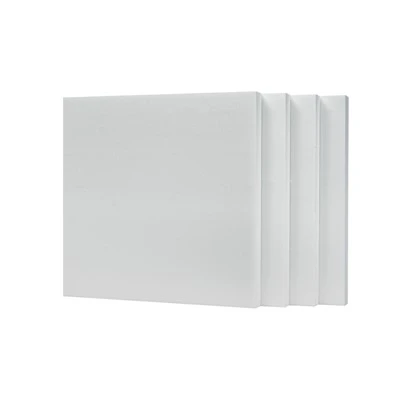
If you’re planning a project—whether it’s a home office, restaurant, school, or warehouse—and you want to make sure your space is both fire safe and sounds great, we’re here to help. We can walk through your layout, answer questions about different board types, and work with you to find a solution that fits your needs. Don’t let someone tell you you have to choose between safety and acoustics. Reach out today to learn more about our fire retardant insulation boards and how they can work for your space.
Thermal Insulation Materials References:
- Acoustical Society of America. (2010). Noise Reduction Coefficient (NRC) Testing Methods for Porous Building Materials. Journal of the Acoustical Society of America, 128(3), 1445–1453.
- National Fire Protection Association. (2022. NFPA 70: National Electrical Code and Fire-Rated Insulation Board Performance Standards. Quincy, MA: National Fire Protection Association.
- International Organization for Standardization. (2018). ISO 140-1: Acoustics – Measurement of Sound Insulation in Buildings and of Building Elements – Part 1: Airborne Sound Insulation. Geneva, Switzerland: International Organization for Standardization.
- American Architectural Manufacturers Association. (2021). Acoustic Performance Guidelines for Commercial Insulation Systems. Schaumburg, IL: American Architectural Manufacturers Association.
- Journal of Building Physics. (2019). Effect of Air Gap Thickness on Sound Transmission Loss of Rigid Insulation Panels. Vol. 42, No. 4, 312–328.
Wenzhou Lejia Energy-saving Material Co., Ltd.
As one of the leading manufacturers and suppliers of fire retardant insulation board in China, we’re featured by quality products and good service. Please rest assured to buy advanced fire retardant insulation board for sale here from our factory. We also accept customized orders.
Address: Block A, No. 128 Changxiu Road, Lingkun Subdistrict, Wenzhou Marine Economy Development Demonstration Zone, Zhejiang Province, China.
E-mail: luckyfoam@vip.163.com
WebSite: https://www.lfxps.com/
