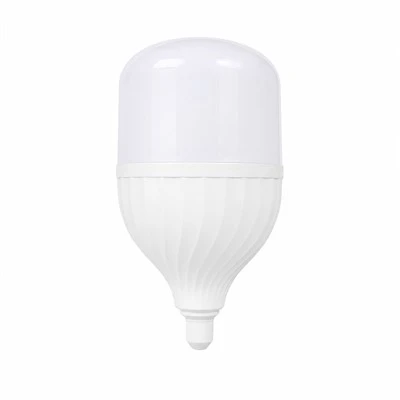
If you’ve ever shopped for T-shaped bulbs (you know, the long tube-style ones used in offices, warehouses, and big retail spaces), you’ve probably wondered the same thing at some point: are these things actually heavy? As someone who’s been supplying T-shaped bulbs for over a decade, I get that question all the time—usually from electricians, facility managers, or even small business owners who are hanging dozens of these fixtures in a single space. It’s not a random question, either. If you’re hoisting a 4-foot bulb 12 feet up a ladder, a few extra pounds can make the job way harder (and more dangerous) than it needs to be. Plus, if you’re replacing an old bulb, you don’t want a new one that’s so heavy it’ll pull your existing fixture right off the ceiling. Let’s break this down, no jargon, just real stuff I’ve learned from years of working with these bulbs. T Shaped Bulbs
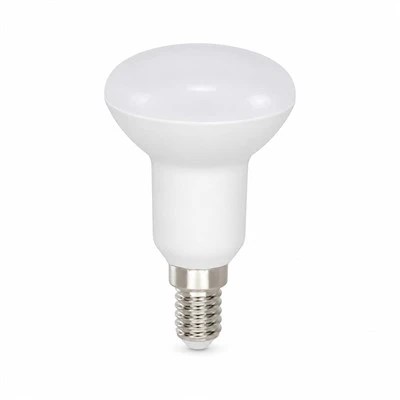
First off, let’s set the baseline: what even is a T-shaped bulb, and why does their weight matter in the first place? T-shaped bulbs, sometimes called linear tube bulbs, get their name from their cylindrical shape—like a tall “T” that’s standing on its end. The most common types are T8, T5, and T12, numbers that refer to the diameter of the tube in eighths of an inch (so a T8 is 1 inch wide, T5 is 5/8 inch, T12 is 1.5 inches). Back in the day, almost all T-shaped bulbs were fluorescent, and those were known to be pretty lightweight—usually around 1 or 2 pounds for a 4-foot tube. But now, most suppliers (including me) sell LED T-shaped bulbs instead, because they last way longer and use way less energy. That’s where a lot of people get confused: LED versions are a little different than old fluorescents, and weight varies a lot depending on what the bulb is made of.
Let’s get specific with numbers, because that’s what actually matters for hanging. A basic 4-foot T8 LED bulb—this is the most popular one for offices and home garages—usually weighs between 10 and 16 ounces. Wait, that’s less than a pound! For reference, a can of soda is about 12 ounces, so a T8 LED is just a little heavier than that. The smaller T5 LED bulbs, which are used for under-cabinet lighting or smaller retail fixtures, are even lighter—usually 6 to 10 ounces, half the weight of a soda. The bigger T12 LED bulbs, which are basically old-school fluorescents made new, are the heaviest of the common ones, but even they only weigh around 18 to 24 ounces for a 4-foot tube. That’s still less than 1.5 pounds—hardly enough to strain your arms if you’re lifting one, right?
Wait, why does the weight vary so much? I’ve had customers ask me that, and it all comes down to two things: the materials used inside the bulb, and whether it’s a single-ended or double-ended design. Let’s start with materials. Old fluorescent bulbs were made mostly of glass and a little mercury vapor, plus a thin metal end cap. They were super light, but they broke easy, and they had that nasty mercury stuff. LED bulbs, on the other hand, have a lot more components: the LED chips themselves, a circuit board that controls power, a driver (that’s the part that keeps the bulb from burning out too fast), and usually a plastic or aluminum housing instead of glass. Aluminum is key here—aluminum is lightweight but strong, so most good suppliers use it because it doesn’t add a ton of weight but keeps the bulb from getting damaged when it’s dropped. Cheaper bulbs might use plastic for the housing, but that doesn’t always hold up as well.
Then there’s the end cap design. Double-ended bulbs, which are the most common for T8 and T5, have metal pins on both ends that plug into the fixture sockets. Single-ended bulbs, which are sometimes used for T12 and some specialty T-shaped bulbs, only have pins on one end, and the other end just sits in a socket. Because single-ended bulbs have a thicker housing on one end to hold the power connection, they’re usually a little heavier than double-ended ones—maybe 2 to 3 ounces more for the same length. That’s not a huge difference, but it’s something to note if you’re buying for a specific fixture.
Now, let’s talk about the practical side of things: does this weight actually matter for installation? I’ve seen guys try to hoist a 2-pound bulb up on a ladder, and they’re fine, but if you’re hanging 50 bulbs at once, even 16 ounces adds up. It’s like carrying a backpack with a bunch of cans—each one is light, but 50 of them start to feel heavy. That’s why a lot of electricians I work with prefer T8 bulbs over T12s, because they’re lighter, and they work with most existing fixtures. For residential use, if you’re just replacing one bulb in your kitchen, the weight is basically irrelevant—you won’t even notice it. The only time weight becomes a real concern is if you’re using really long T-shaped bulbs, like 8-foot tubes. Those are way less common, but an 8-foot T8 LED is usually around 2.5 to 3 pounds. Lifting that 8 feet up to a high ceiling? That’s when you might want a buddy to help you, instead of trying to do it alone.
Wait, let’s also clear up a common myth I hear all the time: people think T-shaped bulbs are heavier than they actually are because they’ve carried a broken fluorescent before. Old T12 fluorescent bulbs were a little heavier than modern LEDs, right? Yeah, a 4-foot T12 fluorescent was usually around 1.5 to 2 pounds, but that’s still not super heavy. The big issue with those wasn’t weight—it was breaking mid-install, which is a pain. LEDs are less breakable, so even if they’re a tiny bit heavier, they’re way safer to handle up on a ladder. I had a customer last year who told me he used to drop 2 or 3 fluorescent bulbs a week during office retrofits, and since he switched to my LED T-shaped bulbs, he hasn’t broken a single one. That’s a way bigger win than a few ounces of weight.
Another thing to consider: some cheap, no-name T-shaped bulbs out there are actually heavier than they need to be. Why? Because they skimp on quality. A lot of off-brand bulbs use extra-thick glass or cheap, heavy plastic to cut costs, but that adds unnecessary weight without any benefit. The good bulbs, from a supplier like me, use high-quality aluminum housings and compact drivers, so you get a bulb that’s durable, energy-efficient, and not heavy to handle. If you’re buying random bulbs from a big box store, don’t be surprised if they’re a little chunkier and heavier than the ones I sell—they’re cutting corners to make a lower price tag.
Let me also address a question from people who are worried about their fixtures: will a heavy T-shaped bulb break my existing light? Most standard linear fixtures are made to handle way more weight than a bulb. A typical T8 fixture is designed to hold a bulb that’s up to 3 pounds, which is way more than even the heaviest LED T-shaped bulbs we sell. I’ve never had a customer call me and say a fixture broke because of a heavy bulb. The issues I hear about are almost always related to bad wiring, or fixtures that are old and rusted, not the bulb’s weight. That’s not to say you should go out and buy a 5-pound bulb, but for all the standard fixtures out there, weight isn’t a problem here.
Wait, what about specialty T-shaped bulbs? The ones used for grow lights, or UV lights for water treatment? Those are a different story. A T-shaped grow bulb for a greenhouse might have extra ballast and heat sinks to keep the LED chips cool, so they can be up to 4 or 5 pounds for a 4-foot tube. That makes sense, though—those bulbs have to be super durable, because they’re on 12 hours a day, every day. The weight is a trade-off for longer life and better performance, which is totally worth it for someone who’s running a commercial greenhouse.
Let me wrap this up with what I tell all my customers when they ask about weight: T-shaped bulbs, even the common 4-foot ones, are nowhere near heavy enough to cause serious problems for most people. A basic LED T8 is less than a pound, which is lighter than a small laptop. The only time weight becomes a real factor is if you’re lifting dozens of them at once, or if you’re using extra-long 8-foot tubes, or specialty bulbs like grow lights. If you’re an electrician or facility manager, I’d recommend going with a reputable supplier (that’s me, by the way) for bulbs that are lightweight but built to last, instead of cheap ones that add unnecessary weight. If you’re a homeowner replacing a kitchen bulb, don’t overthink it—grab whatever bulb fits your fixture, it’s not going to be too heavy to handle.
At the end of the day, I’ve supplied T-shaped bulbs for years, and weight is one of the least important specs to worry about when choosing a bulb. The big things are: does it fit your fixture, does it use less energy than your old bulb, does it last longer, and is it safe to use. Weight? It’s just not a make-or-break factor for almost everyone. But if you’re in the market for high-quality T-shaped bulbs that are the right weight, durable, and affordable, feel free to reach out to my team to chat about what you need for your project.
LED T-Bulb References
- U.S. Department of Energy. (2023). "LED Linear Lighting: A Guide for Commercial and Residential Use."
- Lighting Facts Program. (2022). "T-Shape Bulb Weight and Component Specifications."
- National Electrical Contractors Association. (2021). "Installation Best Practices for Linear Lighting Fixtures."
- Energy Star. (2023). "Comparison of Fluorescent and LED Linear Bulb Weights."
Hangzhou Lin’an Mingfeng Electric Parts Co., Ltd.
We are one of the most experienced t shaped bulbs manufacturers and suppliers in China since 1996. We warmly welcome you to wholesale customized t shaped bulbs made in China here from our factory. If you have any enquiry about pricelist and quotation, please feel free to email us.
Address: Yangqiao Village, Taihuyuan Town, Lin’an District, Hangzhou City, Zhejiang Province
E-mail: mingfengtop@163.com
WebSite: https://www.mingfengtop.com/
