Hey there, so you’re probably here because you’ve been sifting through low-voltage power cables for your project, and every time you see “vibration resistance” pop up, you’re like, wait—what does that even actually mean, and how do I know if it’s not just marketing fluff? As a low-voltage power cable supplier who’s been in this game for 12 years (I started in my dad’s warehouse stacking spools on weekends, so this isn’t just a sales gig—it’s personal), I’ve seen more bad cable installs because vibration was ignored than I can count. Let’s break this down like we’re geeking out over cable specs over a post-shift beer, no stuffy jargon, I promise. Power Cable Low Voltage
First, let’s get real: where do low-voltage cables deal with vibration? This isn’t the high-voltage stuff on transmission lines shaking from wind or ice. We’re talking about the cables tucked into factory conveyor systems, elevator car cabling, HVAC units in a mall’s basement, construction equipment (those portable generators or pile drivers that vibrate like crazy), even the wiring in electric forklifts or delivery vans. If your cable’s moving a lot or sitting next to something that rattles nonstop, vibration isn’t a minor headache—it’s a cable killer. Last year, we had a client in a brewery call us panicking because their production line cables were failing every 3 weeks; turns out their bottling line pumps vibrated so hard, the copper cores inside were snapping like dry spaghetti. That’s the kind of stuff we fix here.
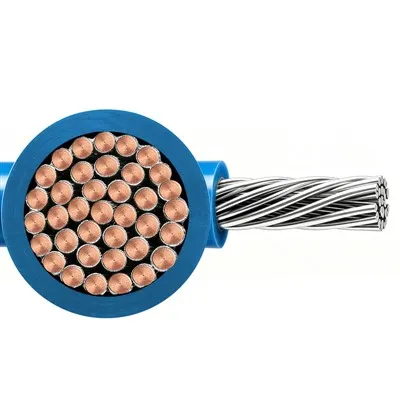
Now, what actually makes a low-voltage cable vibration-resistant? It’s not just one thing—it’s a chain of parts working together, and I’ve seen so many cut corners on each link. Let’s start with the core: that’s the conductive part, usually copper or aluminum. A lot of cheap cables use bare copper strands that are super thin and not twisted tight enough. When you shake them, those loose strands rub against each other, creating tiny cracks until they break. The good stuff? We use stranded copper cores with tight, uniform twisting—like 7 strands for smaller gauges, 19 for thicker ones—and sometimes even compressed strands to eliminate gaps between them. That way, when vibration hits, the strands move as a single unit, not a bunch of loose wires sawing at each other. Aluminum is trickier because it’s stiffer, so we go with extra-stranded aluminum with a rubberized binder around the core to dampen movement.
Next up is the insulation. This is the part people sleep on, but it’s critical for vibration resistance. Standard PVC insulation is cheap, but it’s brittle—if a cable vibrates, that hard PVC cracks, exposes the core, and causes shorts. The better stuff here is cross-linked polyethylene (XLPE) or thermoplastic elastomer (TPE). XLPE is more flexible than PVC once it’s cured, and it has way better tensile strength—so it stretches without breaking when the cable is vibrating. TPE is even more forgiving; it’s kind of like a durable rubber, so it absorbs shock instead of transferring it to the core. We also add a UV stabilizer to the insulation for outdoor vibration spots (like construction equipment) because sunlight makes cheap insulation brittle, which makes vibration damage way worse.
Then there’s the jacketing—the outer layer that protects everything on the outside. This is your first line of defense against abrasion, which often goes hand-in-hand with vibration (a cable shaking against a metal frame is gonna wear down fast). Vibration-resistant jacketing isn’t just thick—it’s tough but flexible. We use chlorinated polyethylene (CPE) or thermoplastic polyurethane (TPU) for this. CPE is resistant to oil, which is huge for factory settings where cables might brush against gear oil, and it can handle repeated flexing from vibration without cracking. TPU is even more abrasion-resistant; we put that on forklift cables that get slammed around all day. I’ve seen a TPU-jacketed cable take a beating for 5 years in a warehouse and barely have a scratch, while a PVC one on the same forklift needed replacement after 6 months.
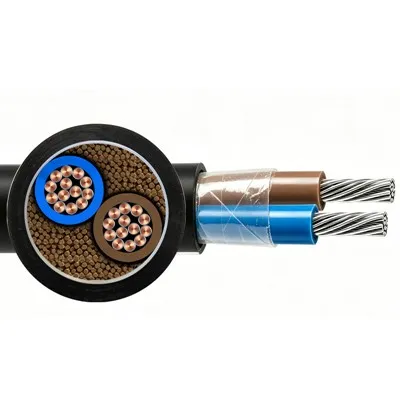
Wait, there’s also the internal fillers and taping between the core and insulation. For multi-core cables (like a 3-core cable for motor power), we use soft, non-abrasive fillers made of polypropylene yarn. This fills the gaps between the cores so they can’t rub against each other when vibrating. A lot of budget suppliers skip the fillers, leaving empty space where cores bash into each other every time the machine runs. That creates micro-wear that builds up until the insulation fails. We also use a layer of adhesive tape between the core bundle and insulation to keep everything held tight—no shifting, no movement when vibration hits.
Now, let’s talk about real-world performance, not just specs. We test every vibration-resistant cable we ship right here in our test lab. We mount a 10-foot spool of cable to a vibrating shaker table that mimics the exact frequency of common industrial machinery (20-200 Hz, which is the range for pumps, conveyors, etc.). We run it 24/7 for 2 weeks straight, then check for core breakage, insulation cracks, or jacketing tears. Last quarter, we had a client in a woodworking shop come to us because their old cables were failing from the saw’s constant vibration. We swapped them for our vibration-resistant ones, and they reported no issues in 8 months—way better than the 1 month they were getting with their previous supplier. That’s the stuff that matters, not just a spec sheet that says “vibration resistant.”
Also, let’s bust a myth: vibration resistance isn’t just for high-vibration environments. Even if you think your application is “low vibration,” think again. I had a client who installed elevator cables in a 10-story office building—they thought the elevator movement was minimal, but over time, the constant small jolts caused the cable cores to fatigue and break, leading to a shutdown. We swapped in our vibration-resistant elevator cables, and they haven’t had an issue in 3 years. So it’s not just for factories or construction sites; it’s for any application where the cable will be in motion constantly.
Another thing to consider: installation. Even the most vibration-resistant cable won’t work right if you install it wrong. A lot of guys will pull a cable tight around a sharp edge, which creates stress points that vibration will amplify. We always tell our clients to use cable grips that are sized correctly, avoid sharp bends (at least 6x the cable’s diameter, no exceptions), and use clamps that hold the cable loosely, not super tight—tight clamps transfer vibration directly to the cable, while loose ones let it move a little without damage. We even include a free installation cheat sheet with every order, because we want our customers to succeed, not just sell a cable and disappear.
Now, why does all this matter for your bottom line? If you use a non-vibration-resistant cable in a high-vibration spot, you’re looking at frequent replacements, downtime, labor costs to pull and re-install cables, even safety issues if a short causes a fire. I’ve seen a factory lose $50k in one day because their conveyor cable failed during a production run—they had to shut down, reroute production, and pay overtime to fix it. Our vibration-resistant cables cost a little more upfront, but they last 5-10 times longer, so the total cost of ownership is way lower. That’s the math every project manager cares about, right?
At the end of the day, vibration resistance in low-voltage power cables is about balancing material science, real-world testing, and common sense. It’s not a buzzword—its a feature that prevents downtime, saves you money, and keeps your operations running smoothly. If you’re working on a project where cables will be moving, near vibrating machinery, or in any environment where constant movement is a factor, you don’t want to cut corners here.
If you’re tired of replacing failing cables every few months, or if you just want to make sure your new project’s wiring holds up over time, hit us up to talk through your needs. We can help you figure out the right gauge, core, and jacketing for your exact vibration situation, no generic solutions. We’ve done this for forklift fleets, brewery bottling lines, construction equipment, office building elevators, you name it—we’ve got the experience to get it right.
Power Cable Low Voltage References
- Underwriters Laboratories (UL) Standard 62, "Low-Voltage Power Cables, Cords, and Flexible Cables"
- International Electrotechnical Commission (IEC) Standard 60227, "Poly insulated cables for rated voltages up to and including 450/750 V"
- IEEE Std 1580, "Standard for Power Cables for Marine Applications"
- Cable Technology Association, "Guidelines for Vibration Resistance in Low-Voltage Cables"
Yangzhou Huayu Cable Co., Ltd.
Yangzhou Huayu Cable Co., Ltd. is one of the most professional power cable low voltage manufacturers and suppliers in China, also supports customized service with low price. Please feel free to wholesale advanced power cable low voltage made in China here from our factory. Contact us for pricelist.
Address: No. 9 Jingang Road, Yangzhou City, Jiangsu Province, China
E-mail: huayucableco@126.com
WebSite: https://www.huayucabletech.com/
